
Balenciaga SS25 2025: Demna’s Return to the Dinner Table
Balenciaga spring/summer 2025 was less a fashion show and more a personal homecoming. Creative director Demna transformed the Cour du Dôme des Invalides into an intimate dining experience, seating prominent guests—Nicole Kidman, Katy Perry, Future, and Lindsay Lohan among them—around a polished wooden table to witness his most introspective collection to date. The SS25 collection blended lingerie-inspired silhouettes, deconstructed tailoring, and technical innovation, proving that Balenciaga SS25 ready-to-wear continues to challenge conventional fashion boundaries while maintaining editorial excellence. Rather than the provocative shock tactics that defined his earlier seasons, Demna presented a collection rooted in personal narrative—a reconnection with the foundation of his design philosophy around memories of his grandmother. This intimate presentation format emphasized the collection’s emotional depth and philosophical underpinnings. The designer’s evolution was palpable: instead of creating fashion designed to provoke reaction, he crafted pieces designed to provoke reflection, questioning fundamental assumptions about desire, appropriateness, and the role of fashion in constructing identity.
The Collection
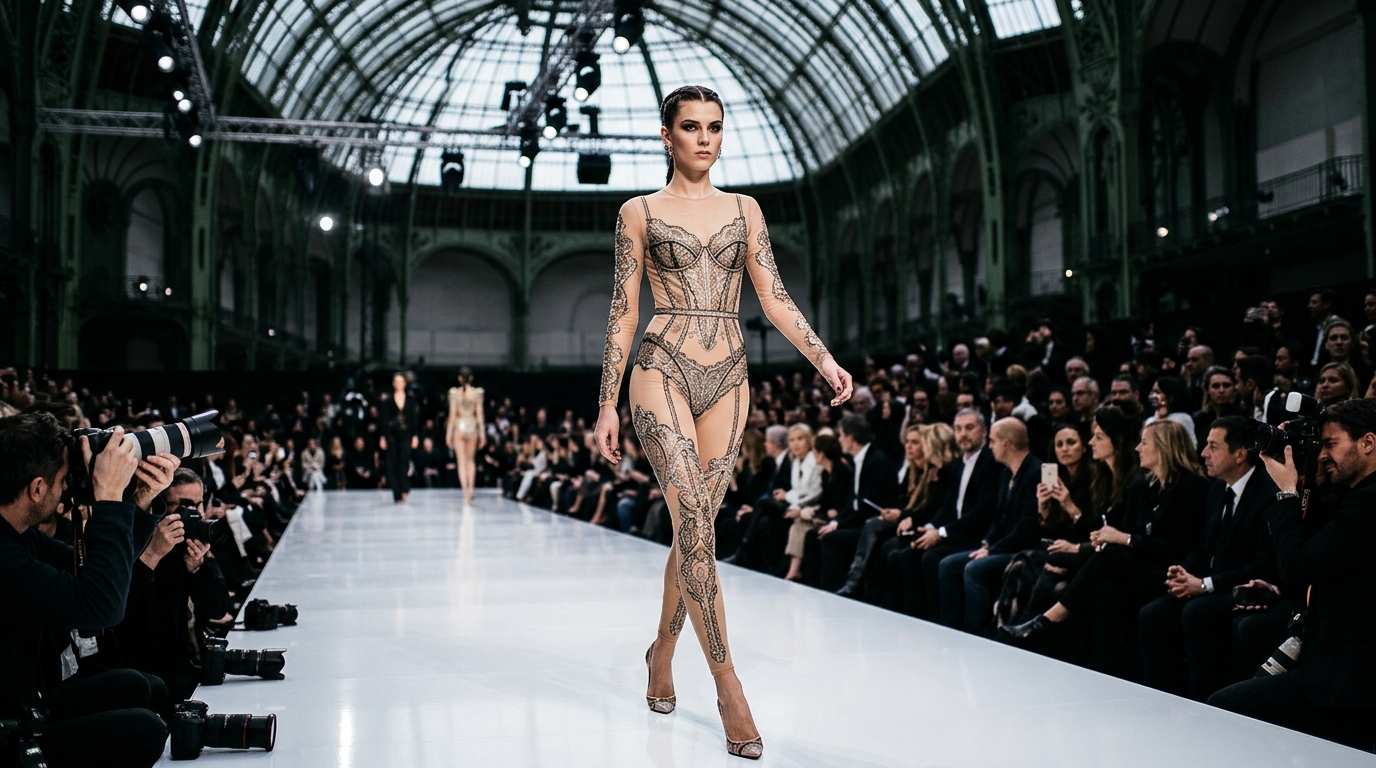
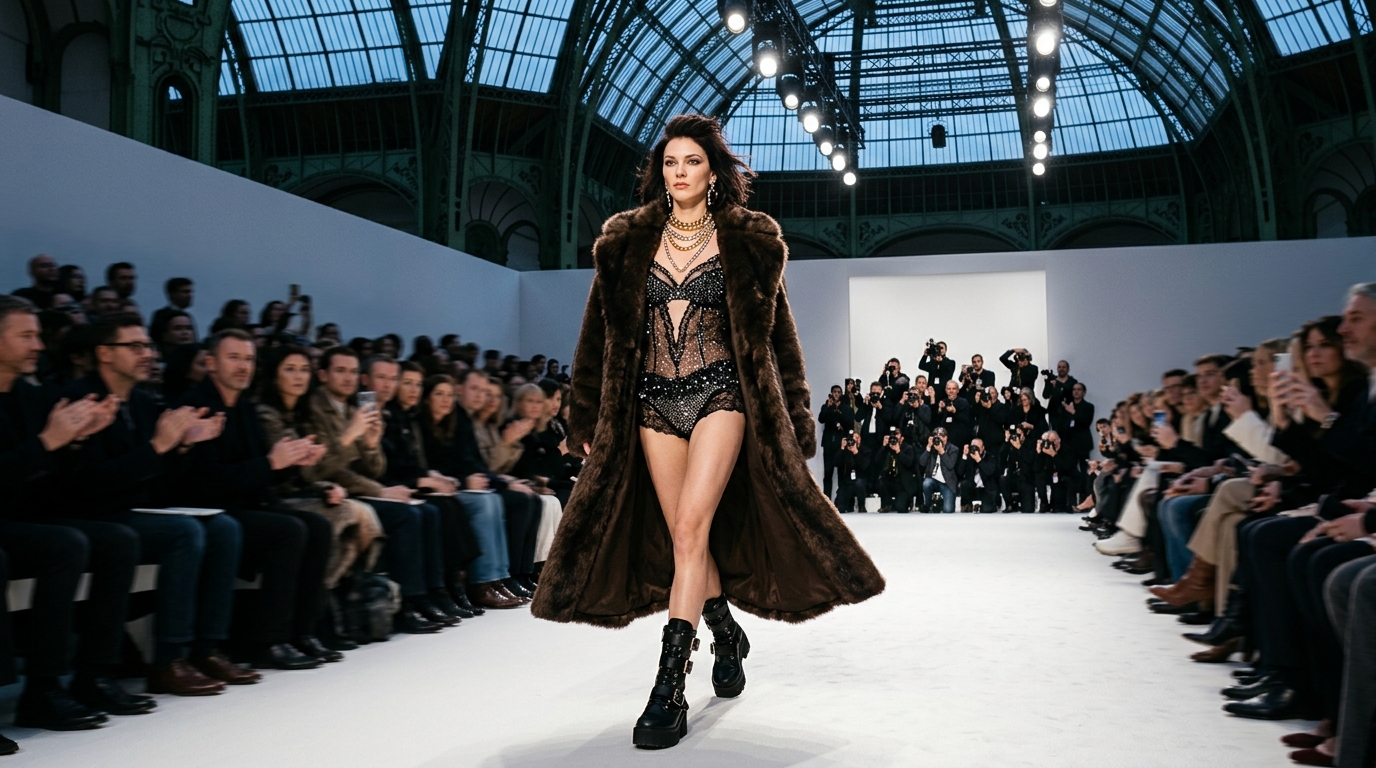
Opening with trompe-l’œil bras, garters, and hosiery meticulously embroidered, encrusted, or jacquard knitted onto flesh-toned bodysuits, Demna signaled a departure from shock value toward genuine sensuality and introspection. The designer explained his intent with remarkable clarity: he wanted something more sensual and almost erotic, a philosophy that permeated the collection’s first acts and reverberated throughout subsequent looks. These weren’t gratuitous references designed to provoke controversy but carefully constructed garments that challenged ideas of appropriateness and desire within high fashion while maintaining emotional authenticity. The trompe-l’œil technique created optical illusions of intimacy rendered permanent through textile artistry, inviting viewers to experience the tension between public and private, between the body’s actual form and its fashioned representation. This opening statement established the collection’s intellectual framework: a serious examination of how fashion functions as a second skin, as a medium for expressing interiority, and as a language for articulating complex emotional states.
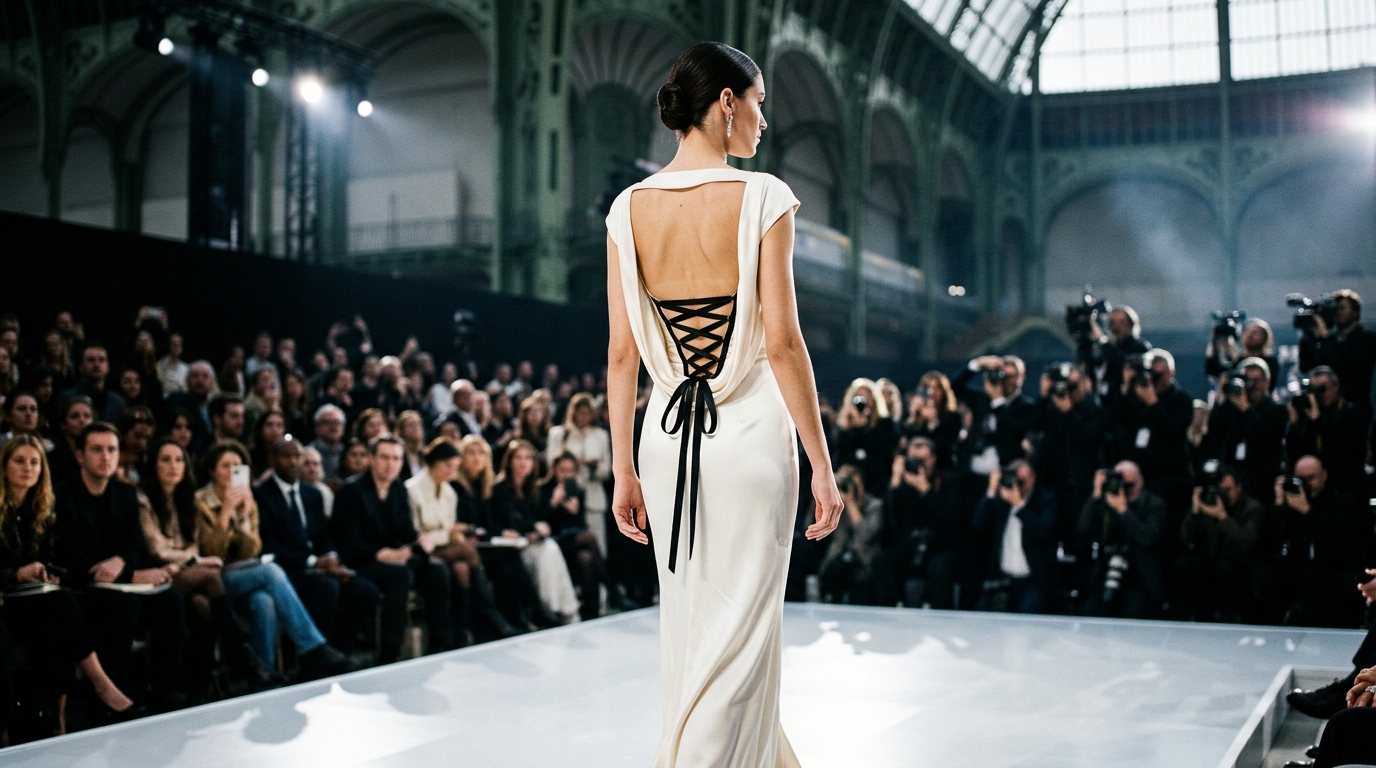
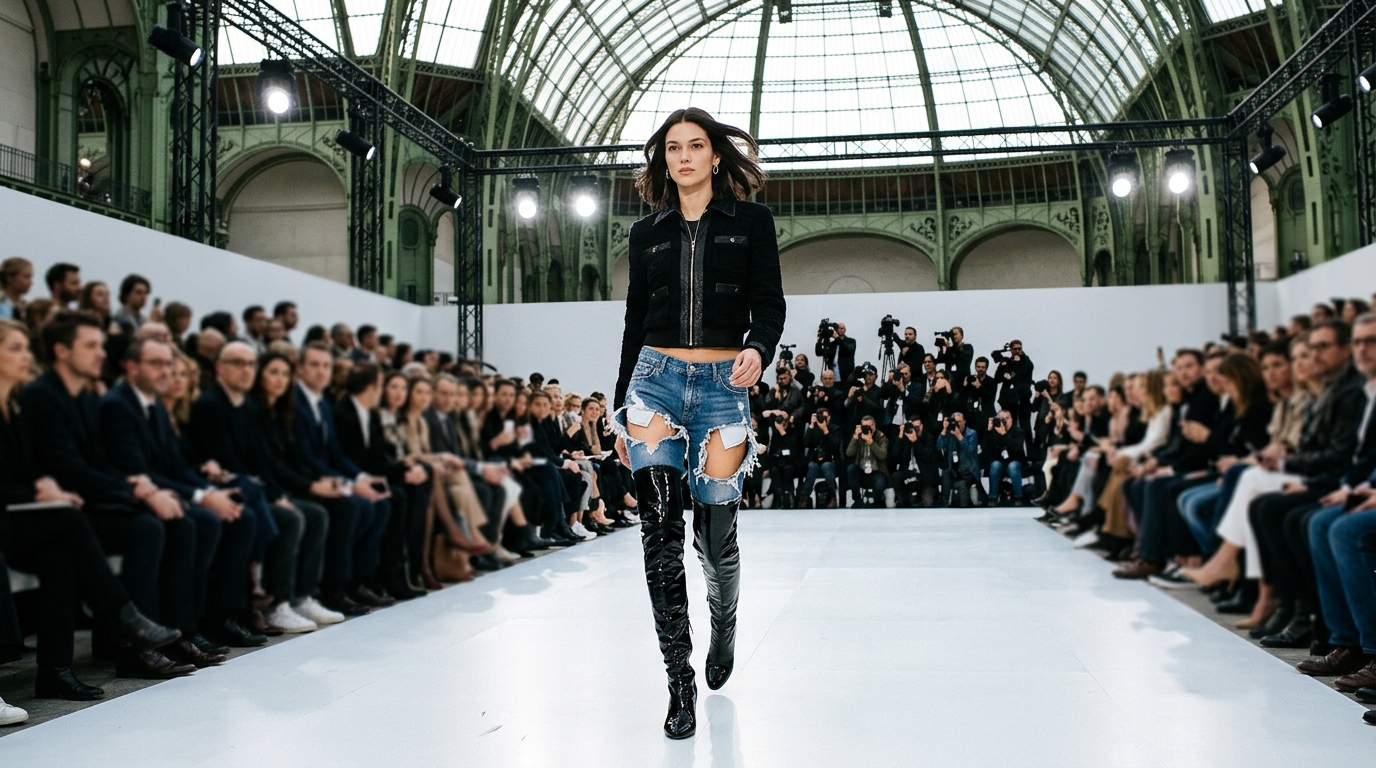
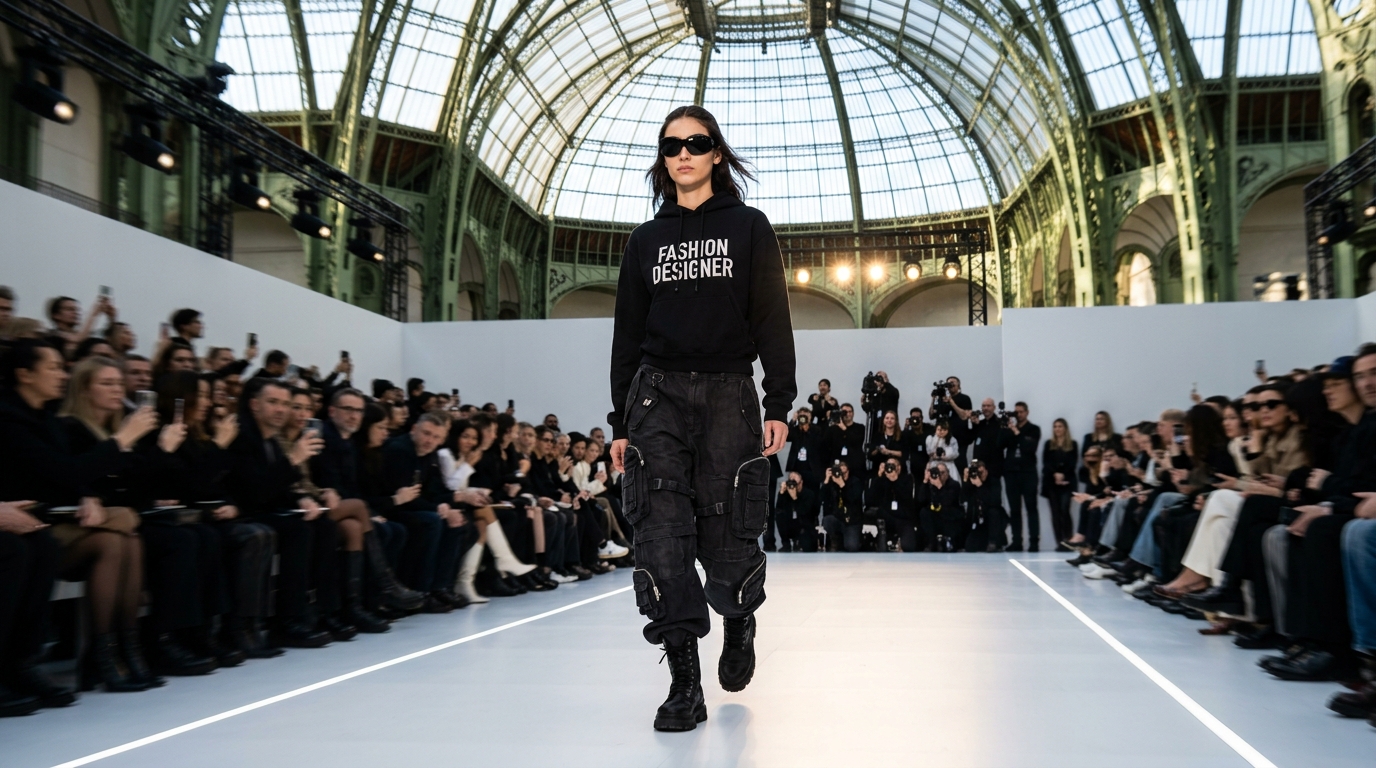
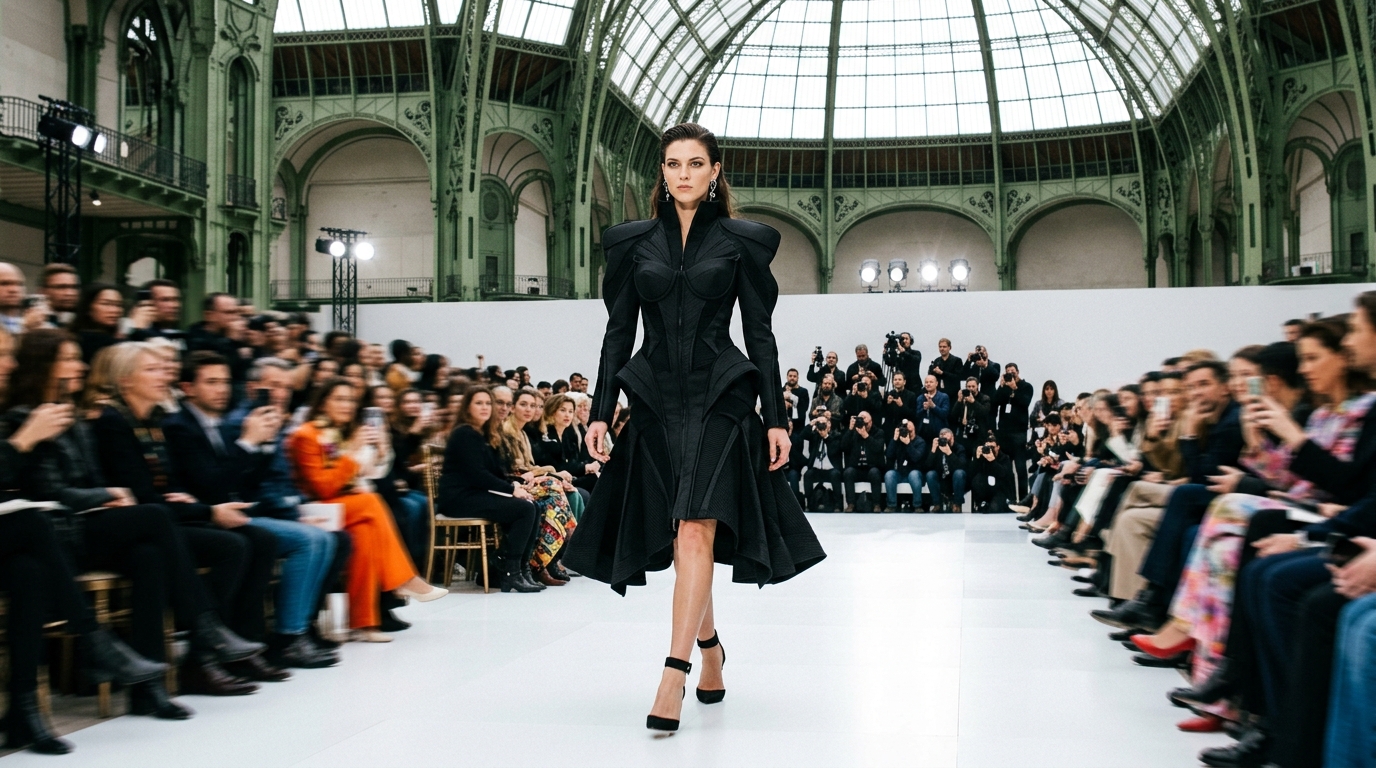
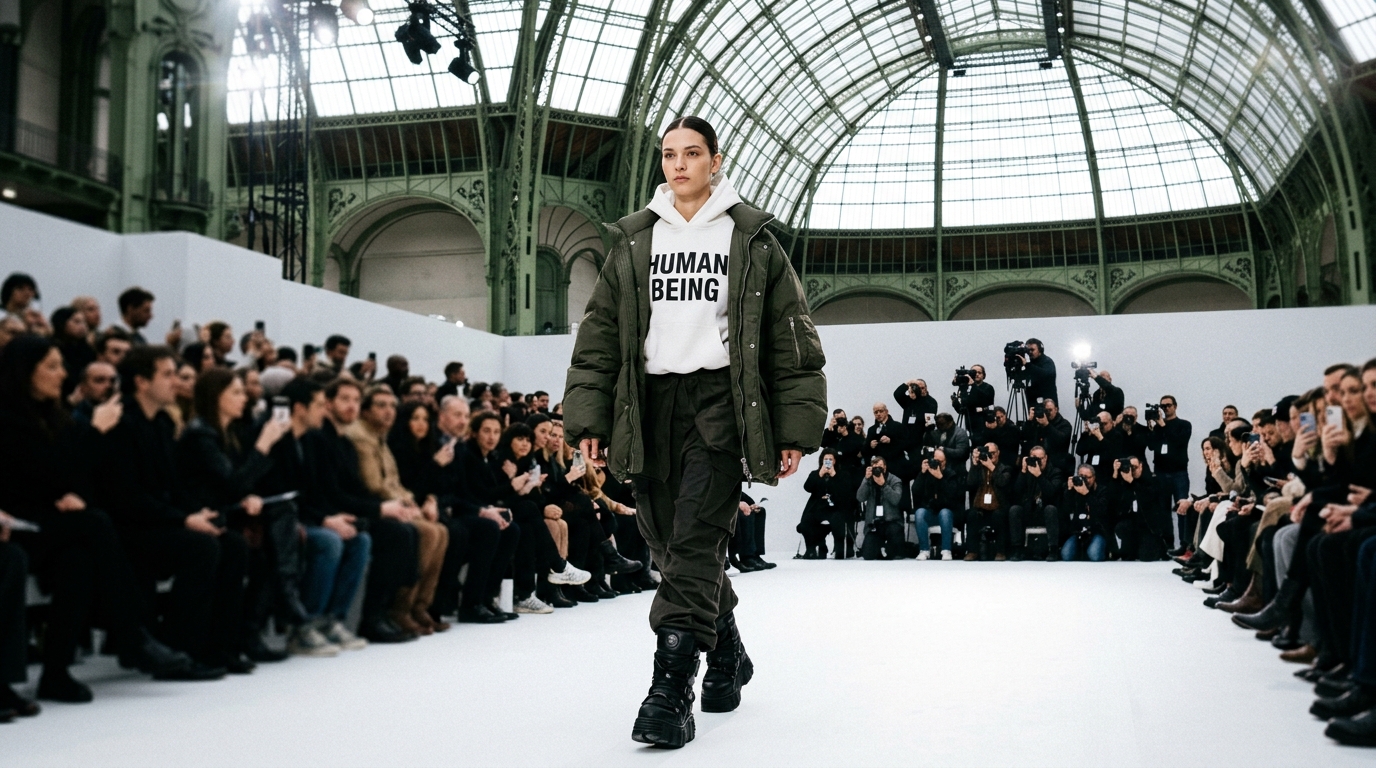
The collection evolved through unexpected silhouettes that rewrote fundamental fashion conventions with surgical precision. Silk secretary dresses that appeared demure at the front but revealed daring open backs laced with wide corset ribbons from neck to knee challenged viewers’ assumptions about propriety and reveal. Demna reimagined fundamental pieces—jeans blown out just beneath the pockets and anchored to tall boots creating entirely new silhouettes, oversized wraparound sunglasses that obscured the face entirely transforming the wearer into an abstract object, and shrunken hoodies emblazoned with provocative philosophical text like ‘Fashion Designer’ and ‘Human Being.’ Each garment functioned both as clothing and as a statement on fashion’s role in identity construction and the relationship between inner self and outer presentation. The deconstructed approach to tailoring demonstrated that destruction itself can be a creative act, that taking apart reveals truths about construction invisible in conventional forms.
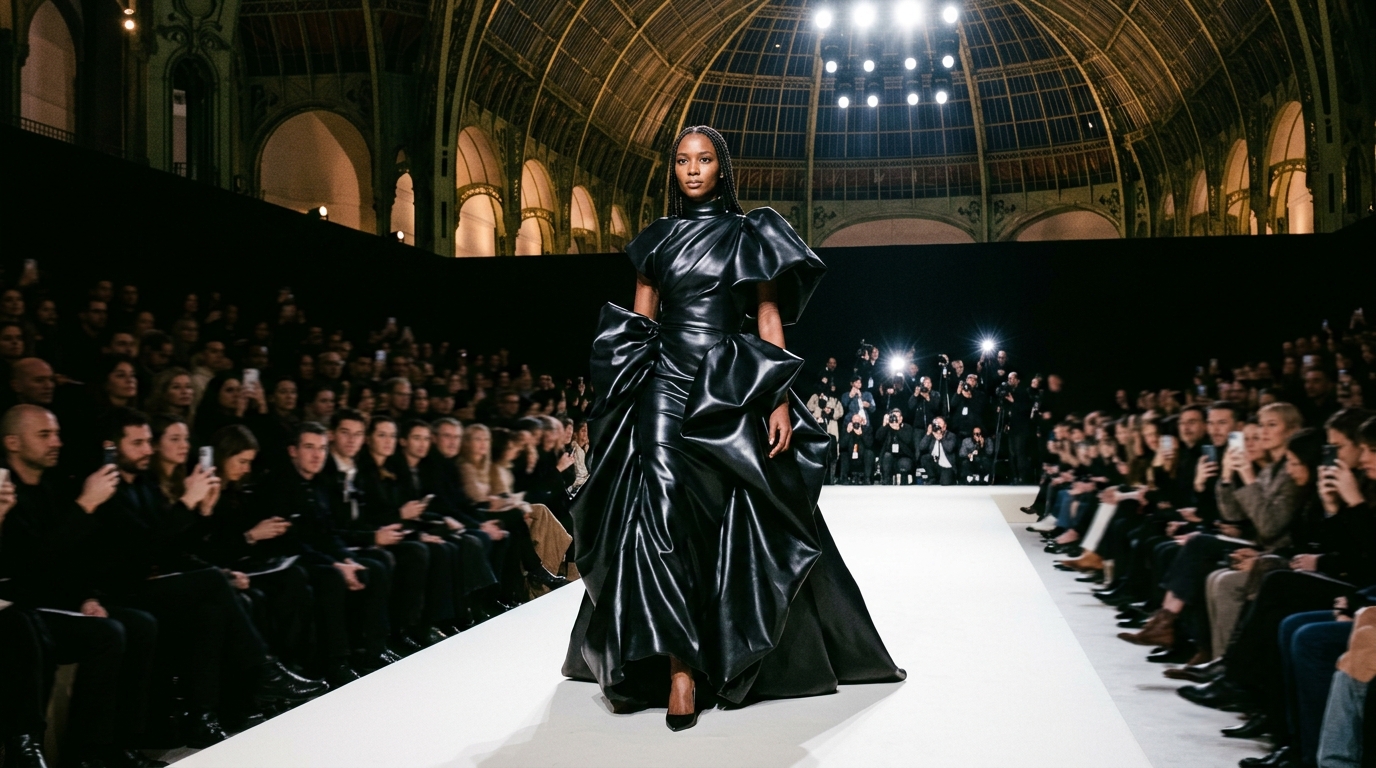
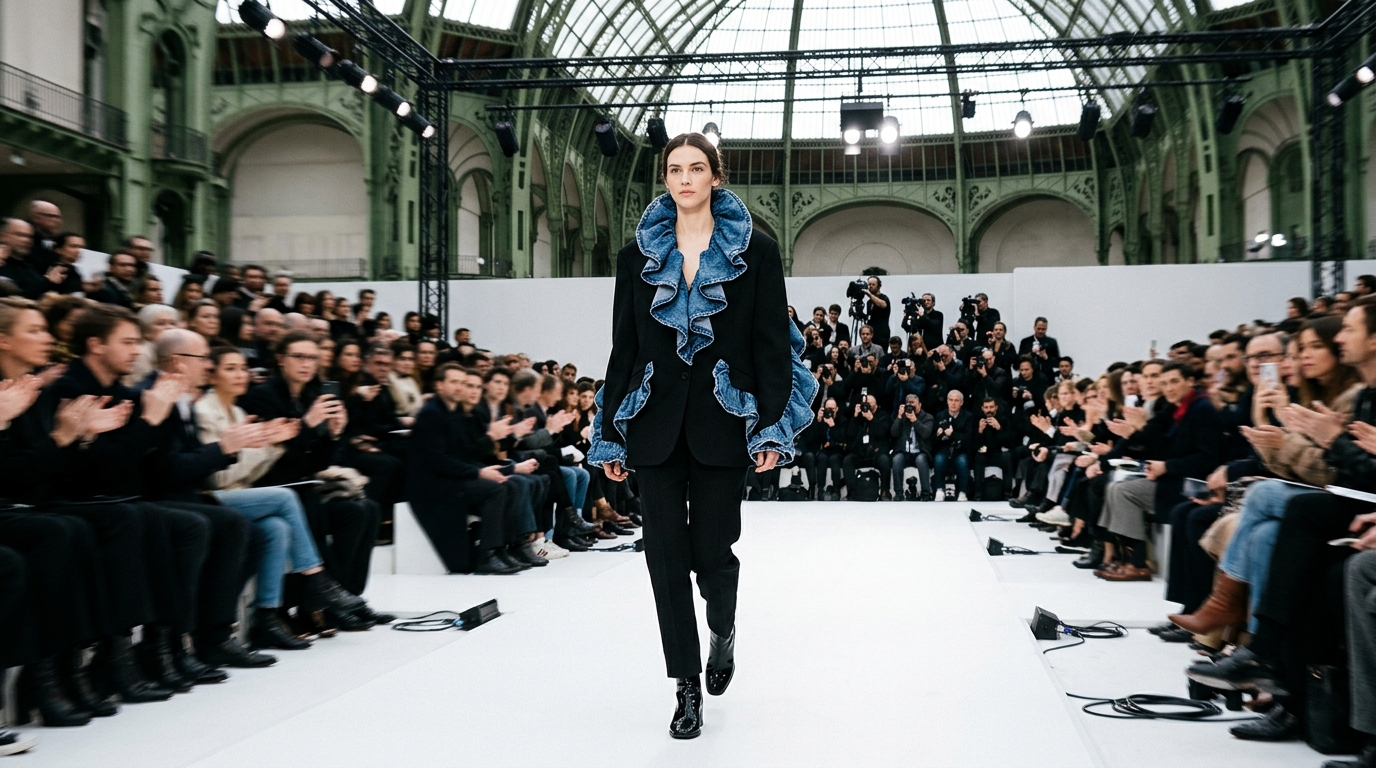
Technical innovation remained central to Demna’s vision and represented the collection’s most forward-thinking elements. Neoprene ‘scuba’ gowns demonstrated remarkable mastery of unexpected fabrics in evening contexts, elevating utilitarian materials into luxurious applications. His signature invention—flexible spandex wrapped nylon with no back fastening—promised garments that clung to the body without traditional closures, eliminating the need for adjustment or compromise. Medici-inspired collars crafted from reconstructed jeans were paired with funnel-necked silhouettes that doubled as bustiers, allowing jackets to be inverted and worn as dresses in demonstrations of conceptual thinking. The collection was less about wearability and more about fashion as conceptual art, each piece a puzzle asking viewers to reconsider their relationship with clothing and the assumptions they make about garment function. Demna’s technical approach suggested that innovation in contemporary fashion lies not in decoration but in construction, not in adding elements but in rethinking fundamental fabrication methods.
Lingerie and the Body
The collection opened with a bold statement on lingerie as outerwear and on the politics of bodily presentation. Rather than the performative lingerie that has dominated recent seasons as a surface-level statement, Demna’s approach was far more introspective and conceptually rigorous. Trompe-l’œil effects created the illusion of intimate apparel rendered permanent in textile form, challenging viewers to question why certain garments are reserved for private moments and others celebrated publicly. This wasn’t about shock but about excavating deeper meanings from fashion’s most loaded category, understanding lingerie not as a provocative tool but as a language for expressing the body’s interior landscape. The silk dresses with dramatic open backs extended this philosophy, revealing vulnerability while maintaining architectural precision through corset lacing that transformed nudity into structure. The collection suggested that true sensuality exists not in exposure but in the tension between concealment and reveal, between the body’s actual form and its fashioned representation. By treating lingerie as a serious design element rather than a novelty, Demna elevated the category and redefined its cultural meaning within fashion discourse.
Deconstructed Tailoring and Reconstruction
Demna’s approach to tailoring in SS25 was fundamentally reconstructive in ways that revealed hidden architecture and challenged conventional understanding of garment construction. Jeans weren’t simply cut but systematically repurposed into unexpected elements—pant legs became jacket lapels, waistbands transformed into architectural collars, and hems anchored to boots to create entirely new silhouettes that referenced their source material while transcending it. This deconstruction wasn’t destructive or nihilistic; it was revelatory, exposing the hidden architecture of everyday pieces and demonstrating that meaning emerges from understanding construction logic. Oversized proportions exaggerated these reconstructions, creating an almost theatrical silhouette that walked the line between fashion and performance art, between wearable garment and conceptual statement. The reconstruction work demonstrated sophisticated understanding of garment deconstruction as a creative methodology, not merely as a surface aesthetic but as a fundamental design approach that required technical precision and artistic vision to execute successfully.
Technical Fabrication and Innovation
The most innovative element of Balenciaga SS25 was Demna’s continued pioneering experimentation with technical materials and construction methods that expanded fashion’s technical vocabulary. The flexible spandex wrapped nylon with no back fastening represented a genuine breakthrough in functional garment design—a piece that adapts to the wearer rather than requiring the wearer to adapt to it, eliminating the friction between body and garment through innovative material engineering. Neoprene ‘scuba’ gowns brought utilitarian materials associated with water sports into evening wear contexts, challenging material hierarchies and demonstrating that luxury exists in thoughtful application rather than in material type alone. Transparent overlays and strategic cutouts demonstrated surgical precision in fabric manipulation, each opening serving conceptual purpose rather than existing merely for decoration. These technical innovations proved that Balenciaga remains committed to pushing the boundaries of what fashion can achieve through material experimentation and construction innovation. The technical approach suggested that the future of fashion lies in solving problems through innovation, in asking what new materials and methods can achieve, and in understanding that true advancement comes through rigorous experimentation.
Conceptual Messaging and Text
Shrunken hoodies bearing text like ‘Fashion Designer’ and ‘Human Being’ introduced meta-commentary on fashion’s role in identity and the paradox of self-presentation through clothing. Unlike previous seasons where Demna’s text-based pieces felt more provocative and confrontational in intention, SS25’s messaging was more philosophical and contemplative in tone. By placing these simple declarations on oversized, humorous garments, Demna suggested a kind of acceptance or resignation—that fashion exists in the space between the roles we play and the humans we are beneath them, that clothing functions as both mask and mirror simultaneously. This conceptual layer elevated the collection beyond surface aesthetics into the realm of genuine philosophical inquiry. The text choices revealed a designer engaging with fundamental questions about identity, authenticity, and the role of fashion in mediating between interior self and exterior presentation. Rather than attempting to provoke through controversy, the messaging invited quiet reflection on how we use fashion to communicate who we are or who we wish to become.
Verdict
Balenciaga’s spring/summer 2025 collection marked a significant evolution in Demna’s design philosophy and artistic maturation as a creative leader. Rather than relying on shock value or extreme silhouettes designed merely to provoke reaction, SS25 demonstrated a designer at ease with his vision and confident in his ability to provoke genuine thought without sensationalism or provocation tactics. The lingerie-forward opening, deconstructed tailoring, and technical innovations collectively suggested a collection less interested in trends than in challenging fundamental assumptions about how fashion functions as a system and as a language of identity. While some critics perceived the collection as toned down from Demna’s typical extremism, the reality is considerably more nuanced: this was sophisticated conceptual dressing at its finest, demonstrating that artistic maturity comes through learning to express complex ideas with precision rather than through shock. The personal narrative—Demna’s reconnection with his childhood love of fashion around his grandmother’s table—infused the collection with genuine emotional depth that elevated it beyond mere aesthetic experimentation. Balenciaga SS25 represents a maturation of the house’s aesthetic, one that refuses to compromise on vision while meaningfully expanding the emotional and intellectual scope of contemporary ready-to-wear. It’s a collection that will age remarkably well, one that challenges viewers to reconsider their fundamental relationship with fashion itself.