Dior SS25 2025: Modern Amazons Redefine Spring Femininity
Maria Grazia Chiuri’s Spring/Summer 2025 ready-to-wear collection for Christian Dior transformed the Paris runway into an arena for modern female warriors. Drawing inspiration from the Amazons and a historic 1951 silhouette, Chiuri merged athletic lineage with haute couture precision, creating a collection that celebrates empowerment through asymmetric tailoring, bold graphic prints, and statement embroidery. Presented in a dramatic 230-foot glass installation where artist Sagg Napoli shot real arrows overhead, the Dior SS25 collection announced a fierce new era for the storied French house. The collection serves as a masterclass in thematic coherence, where every element—from construction techniques to color choices—reinforces the central narrative of strength, dynamism, and contemporary femininity. Rather than merely referencing athleticism, Chiuri genuinely integrates sportswear grammar into haute couture silhouettes, creating a dialogue between distinct aesthetic traditions that feel inevitable rather than forced. The Amazone silhouette, originally designed by Christian Dior himself in 1951, becomes a symbolic anchor for conversations about women’s agency, movement, and the relationship between fashion and embodiment. This collection proves that nostalgia need not sacrifice innovation, and historical reference can serve as a launching point for urgent contemporary design.
The Collection
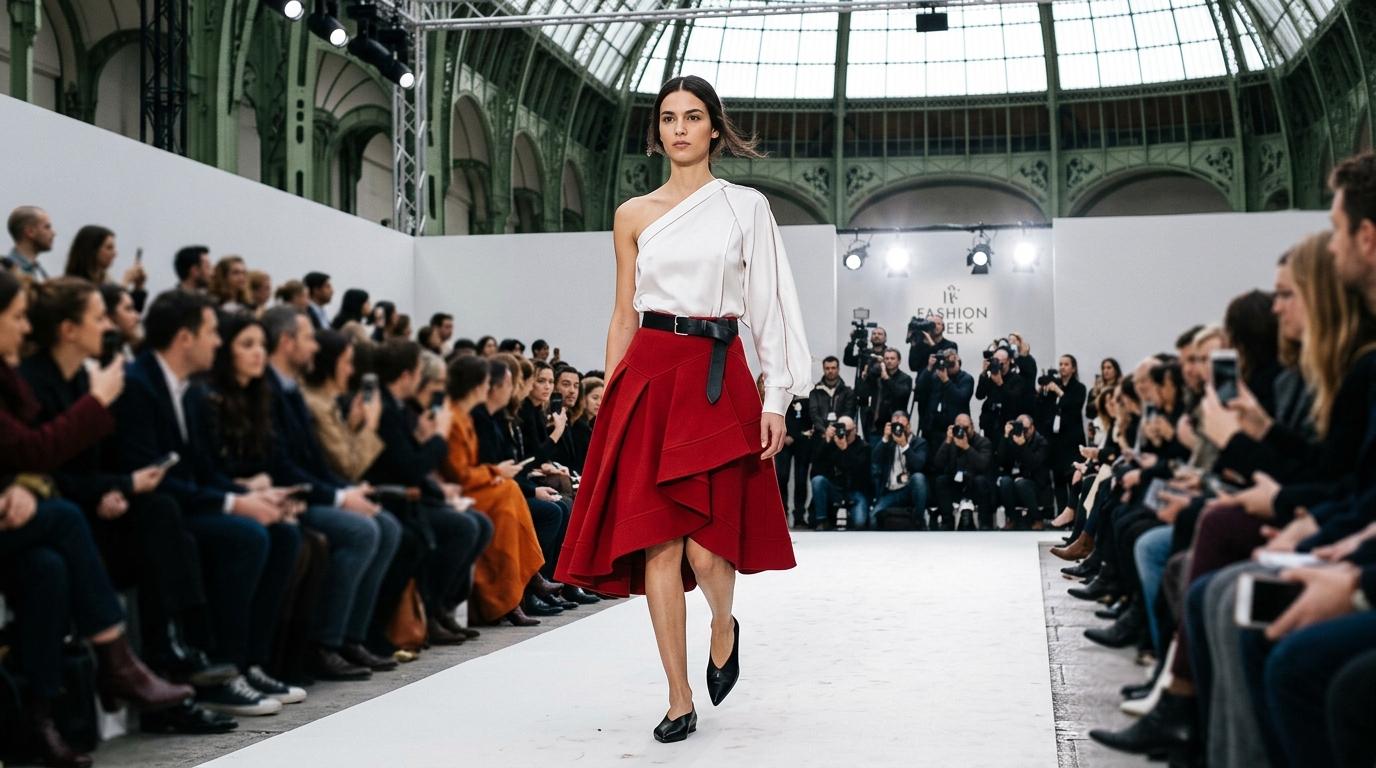
The Dior Spring/Summer 2025 collection begins with a radical reassessment of sportswear heritage and its relationship to luxury fashion. Chiuri explored the intersection of athleticism and femininity by reworking the house’s original ‘Amazone’ silhouette from 1951—a design centered on the asymmetric power dressing that defined early Dior’s revolutionary approach. This season, that foundational cut evolved into contemporary garments featuring sharp, one-shoulder necklines that suggested a quiver of arrows slung across the torso, transforming a historical reference into an immediately recognizable symbol of the collection’s warrior aesthetic. The asymmetric approach appeared throughout the lineup: from sleeveless shells with dramatically cut armholes that expose the skin in unexpected ways, to bias-cut skirts that twisted and turned around the body as if caught mid-motion, evoking both archery stance and kinetic energy. Chiuri’s treatment of asymmetry transcends mere formal experimentation; it becomes a statement about balance, power, and the feminine body refusing conventional symmetry. The proportions feel architectural yet wearable, structured yet dynamic, demonstrating how technical precision in tailoring can translate into garments that feel alive on the body. These asymmetric elements create movement even in stillness, suggesting action and readiness.
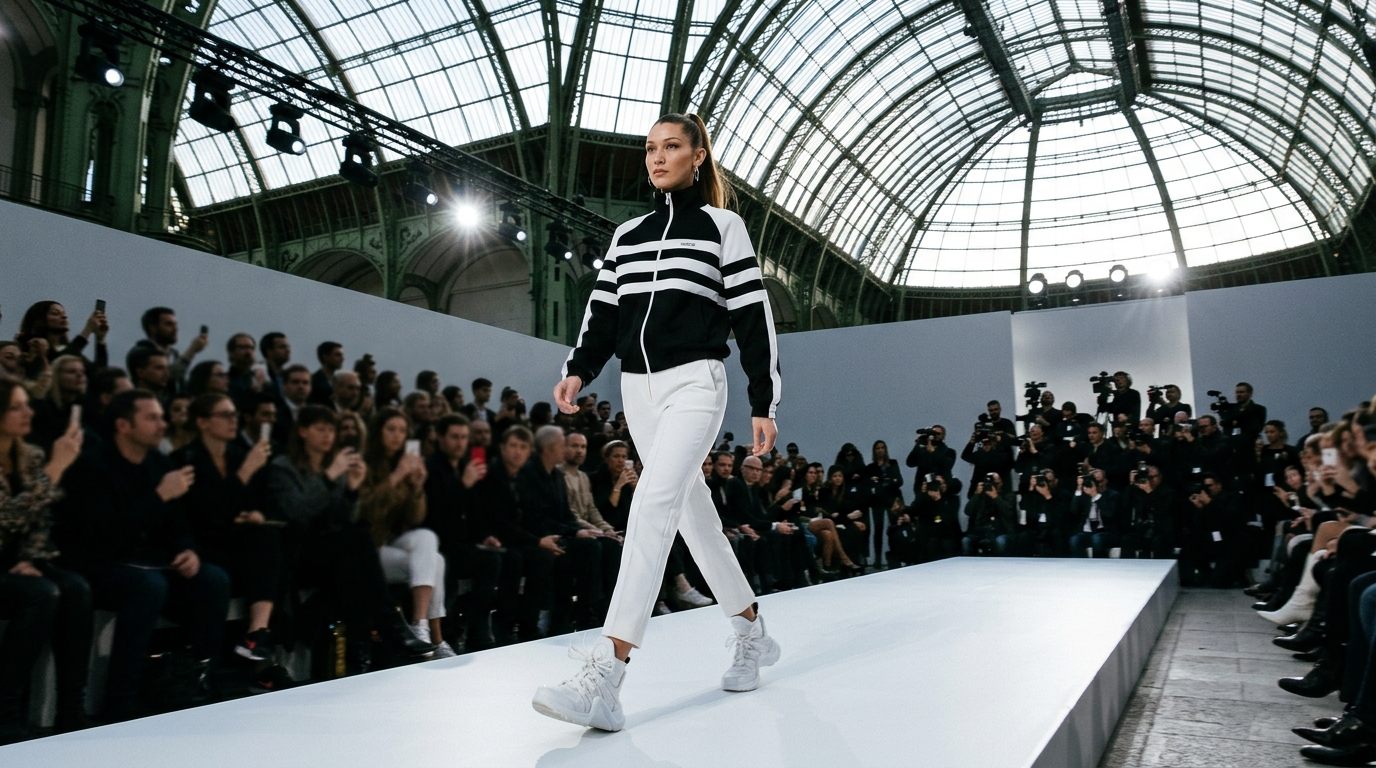
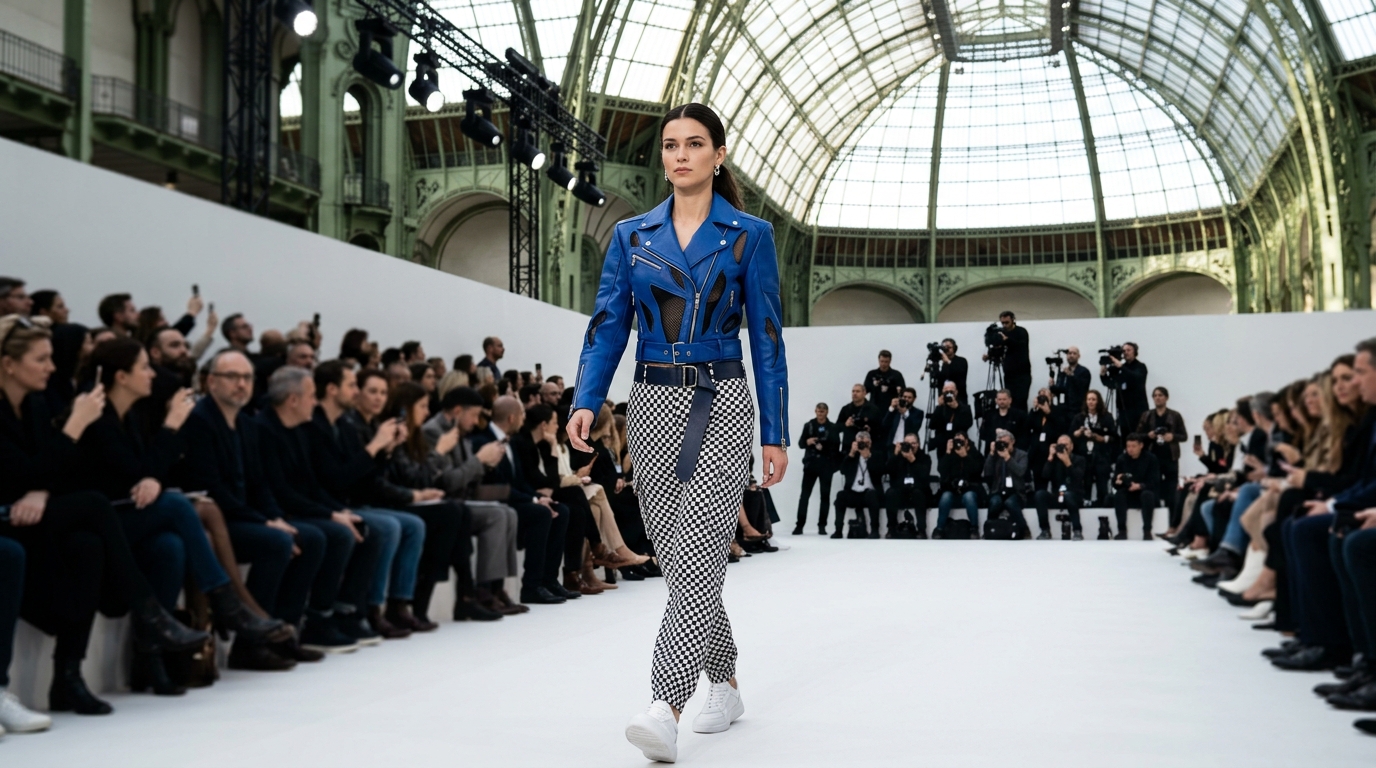
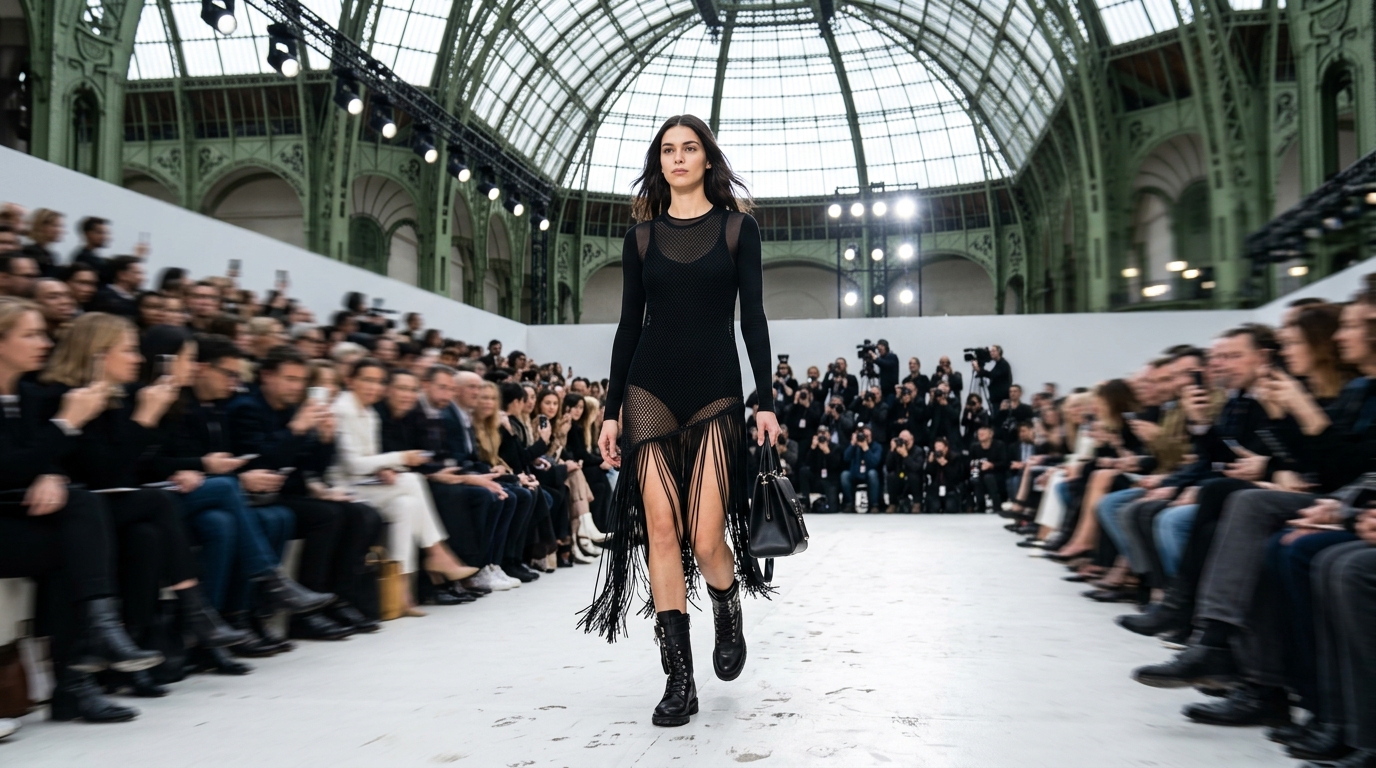
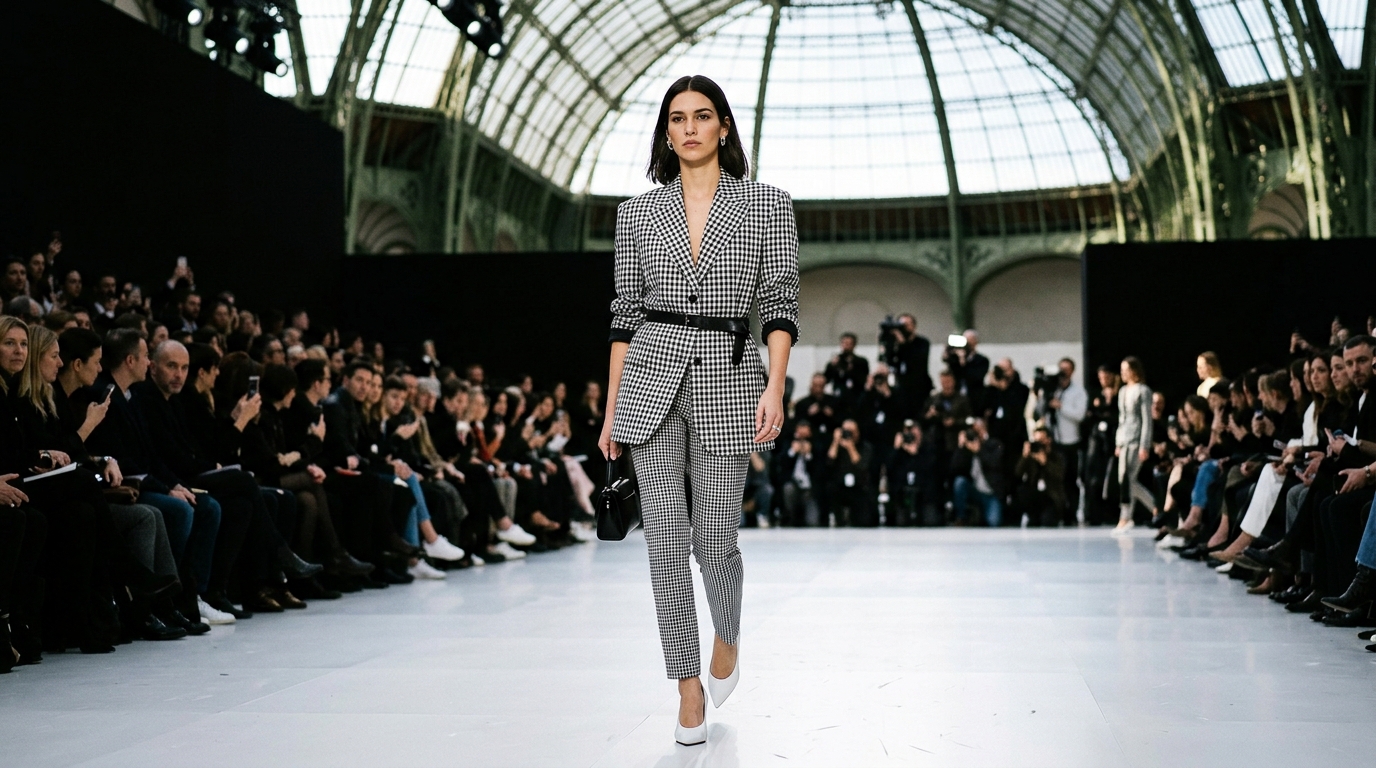
Monochromatic color blocking dominated the collection’s visual language, with graphic checkerboard patterns and the house’s signature seven-stripe motif from the early 1970s appearing on track pants, biker jackets, mesh dresses, and cargo silhouettes. These graphic elements borrowed from Op Art aesthetics, creating a visual rhythm that felt both retro-futuristic and decidedly contemporary. The seven-stripe motif, originally created during the 1970s iteration of Dior’s design vocabulary, became a talisman throughout the collection, appearing on sleeves, pants legs, and accessories as a constant visual reminder of the house’s heritage. The palette shifted between stark black-and-white contrasts that emphasize graphic clarity and bold pops of color—electric blues, deep crimsons, and sharp citrine yellows that broke through the monochromatic foundation with graphic intensity. These color choices evoke both athletic wear and high fashion simultaneously, creating cognitive dissonance that forces viewers to reconsider their assumptions about luxury. Layering emerged as a key design strategy throughout: leotards functioned as structural elements beneath sheer overlays, while mesh inserts created transparency and movement against dense fabrics. The interplay between opaque and translucent materials becomes a meditation on revelation and concealment, suggesting that modern femininity embraces both vulnerability and strength. Technical fabrics were manipulated with precision, creating surfaces that catch light differently depending on the viewer’s position, adding dimensionality and visual interest to even monochromatic pieces.
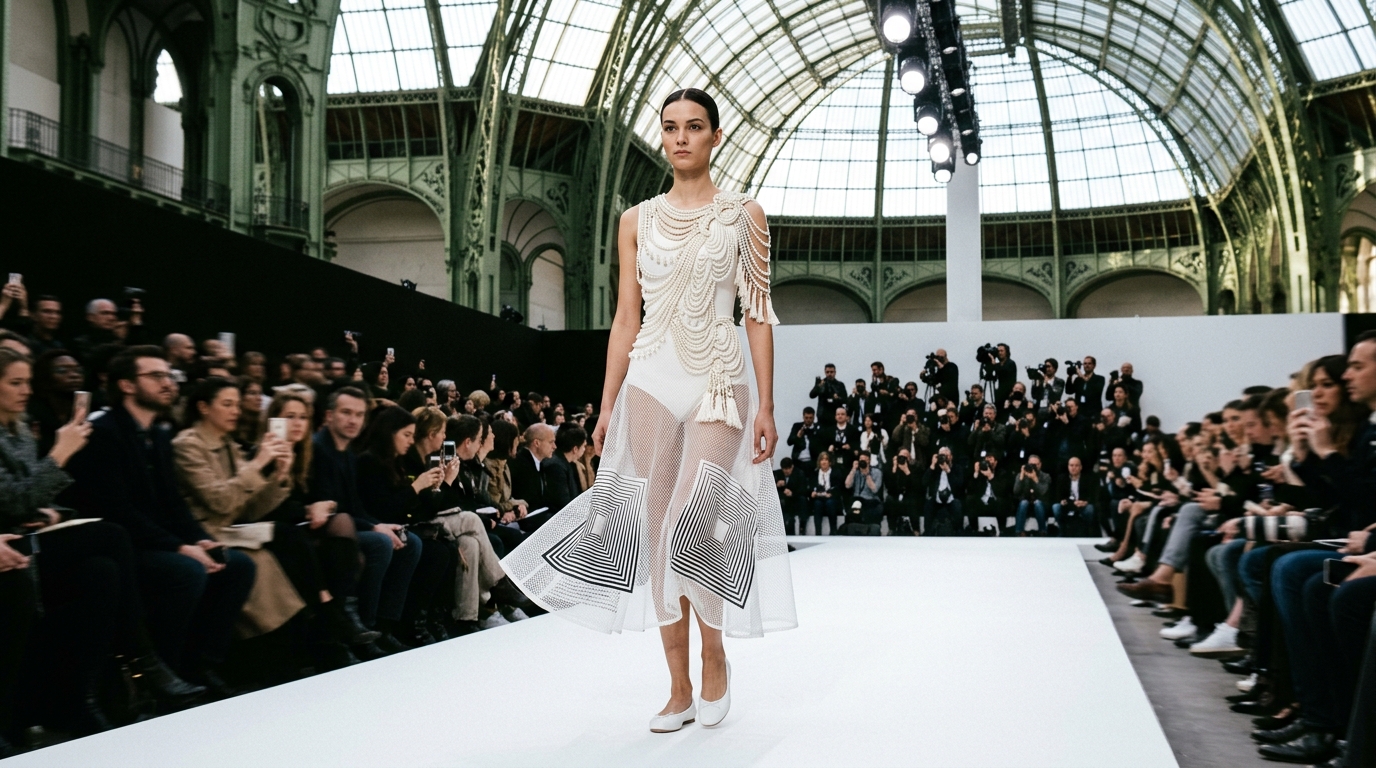
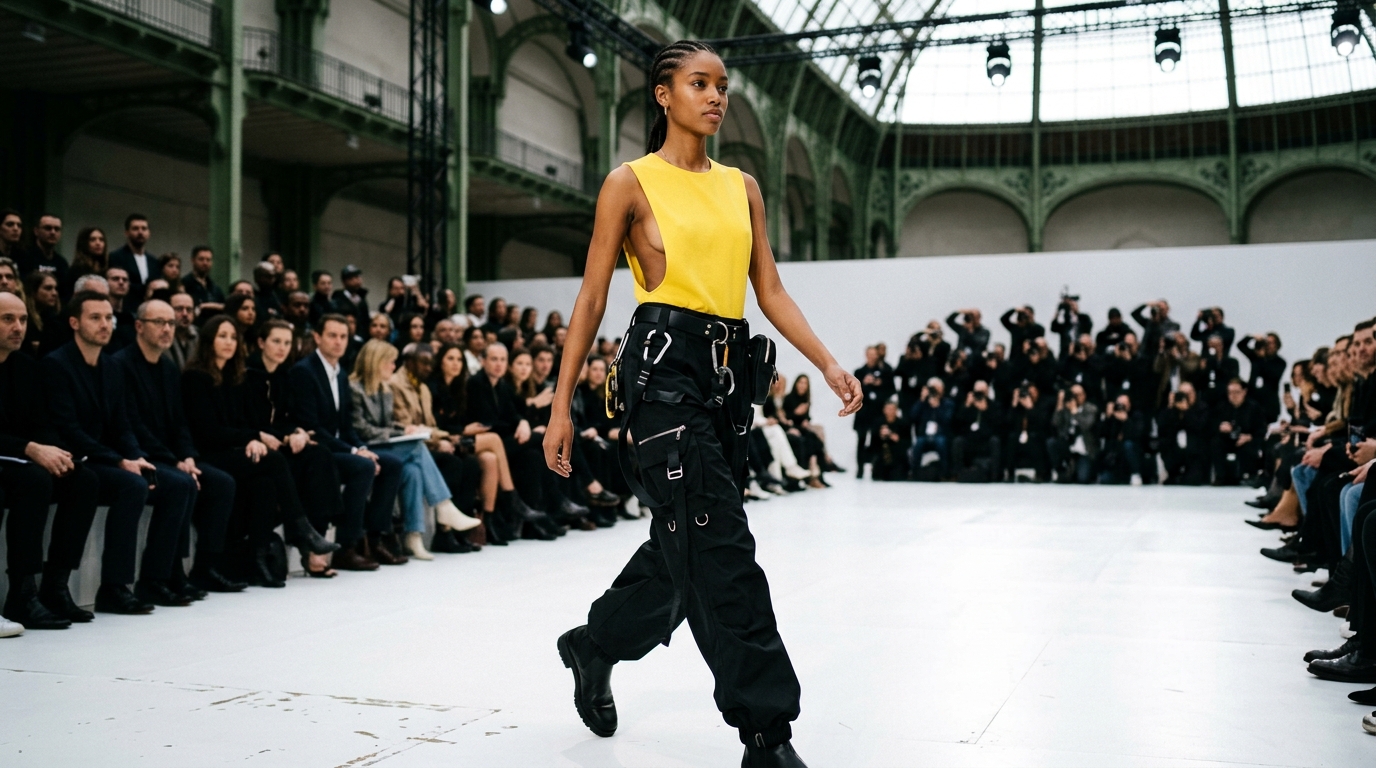
Embellishment became the collection’s unexpected counterpoint to its sporty foundation, creating visual and conceptual tension that drives much of the collection’s emotional power. Delicate fringes, cascading tassels, and pearl embroidery unfurled across exceptional pieces, transforming athletic basics into luxury statements that resist easy categorization. A pristine white leotard might feature an explosion of pearl beading along one shoulder, while cargo pants were offset by intricate embroidered detailing at the hip, creating moments of baroque intensity against otherwise minimal silhouettes. This juxtaposition of austere sportswear silhouettes with intricate handcrafted embroidery captured Chiuri’s broader vision with remarkable clarity: femininity expressed through strength rather than delicacy, luxury conveyed through accessibility rather than exclusivity. Evening silhouettes appeared in slinky jersey sheaths that clung to the body before flaring into asymmetric hem lengths, allowing for movement and drama at the moment of transition. Buckled cargo pants in technical fabrics suggested utilitarian chic meets high fashion, while feather details introduced moments of softness and fragility that complicate the warrior narrative, suggesting that power and delicacy need not be opposing forces. The embroidery work demonstrated extraordinary craftsmanship, with artisans hand-placing individual beads and pearls to create cascading effects that seemed almost spontaneous despite their evident precision. This tension between controlled craft and apparently effortless beauty defines much of the collection’s appeal.
Tailoring and Structure
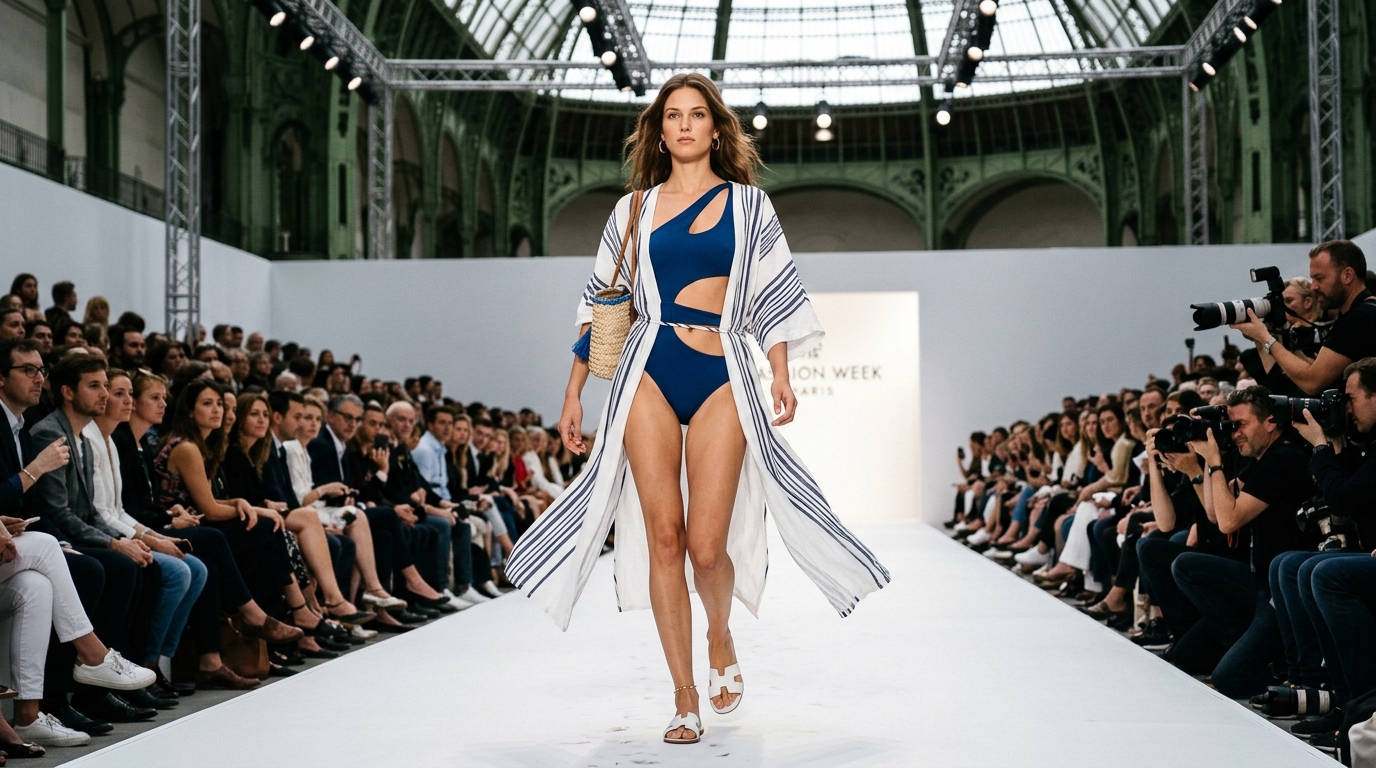
The architectural foundation of Dior SS25 rested on precise tailoring that honored the house’s legendary craftsmanship while embracing contemporary sportswear construction methods. Sharp-shouldered shirts paired seamlessly with flirty A-line skirts, creating silhouettes that balanced structure with fluidity and suggested a dialogue between opposing forces. Cut-out asymmetric swimwear demonstrated how Chiuri deconstructed traditional beachwear, creating pieces that felt both minimal and intensely considered, stripping away excess to reveal essential form. Buckled cargo pants in technical fabrics featured strategic hardware and lace-up details that referenced sneaker-boot construction, blurring the boundaries between ready-to-wear categories and challenging conventional notions of what constitutes appropriate luxury materials. The collection’s tailoring philosophy centered on ‘construction revelation’—exposing seams with intentional precision, showcasing understructure with sheer overlays, and allowing the viewer to read the engineering that preceded the finished garment. This approach transformed each piece into a narrative about craft, labor, and the invisible work that makes fashion possible. Chiuri’s treatment of seams as design elements rather than functional necessities elevated basic tailoring techniques into aesthetic statements. The use of contrasting seam thread, exposed stitching on the exterior of garments, and visible understructure created transparency about the making process, democratizing haute couture’s hidden magic. Shoulder construction received particular attention, with some pieces featuring exaggerated architectural shoulders that referenced both 1980s power dressing and contemporary athletic wear silhouettes, creating a visual bridge between different historical moments and design traditions.
Eveningwear and Dressmaking
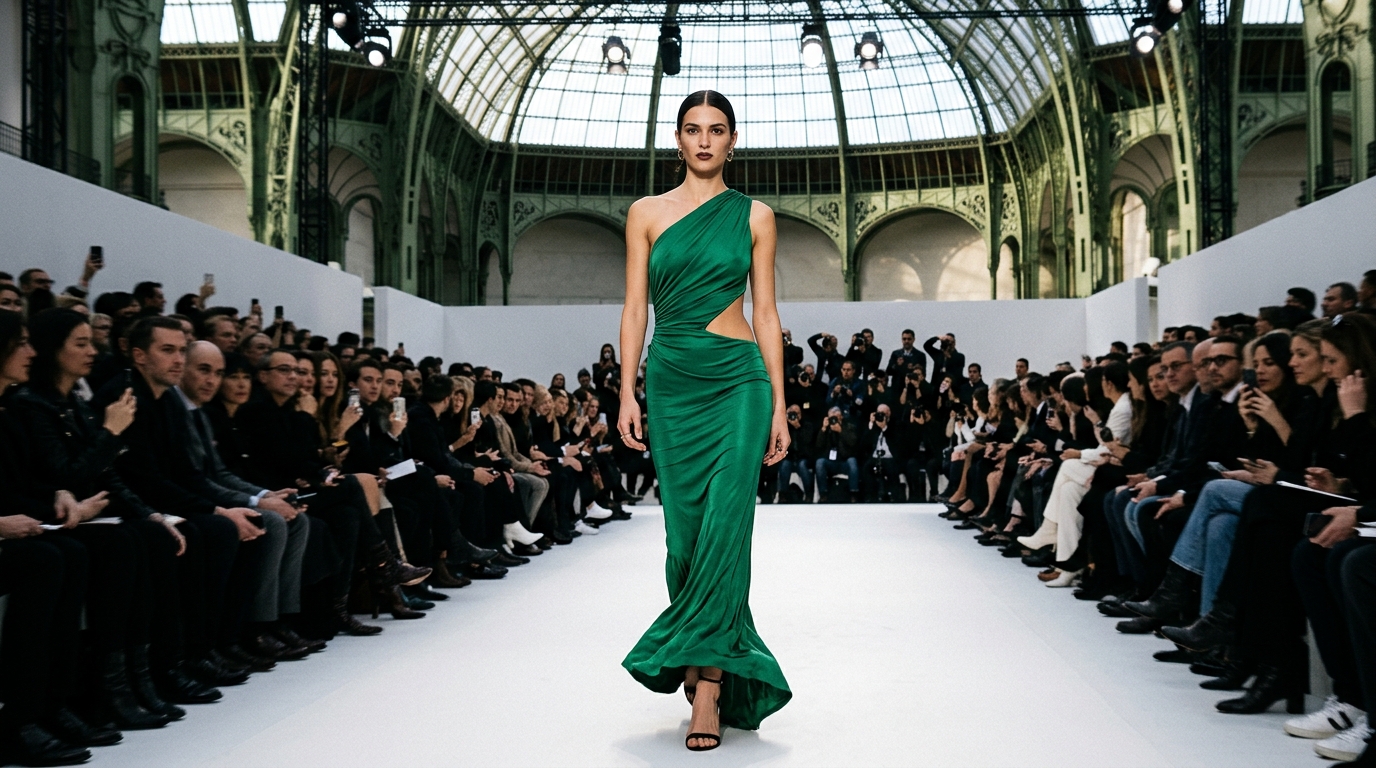
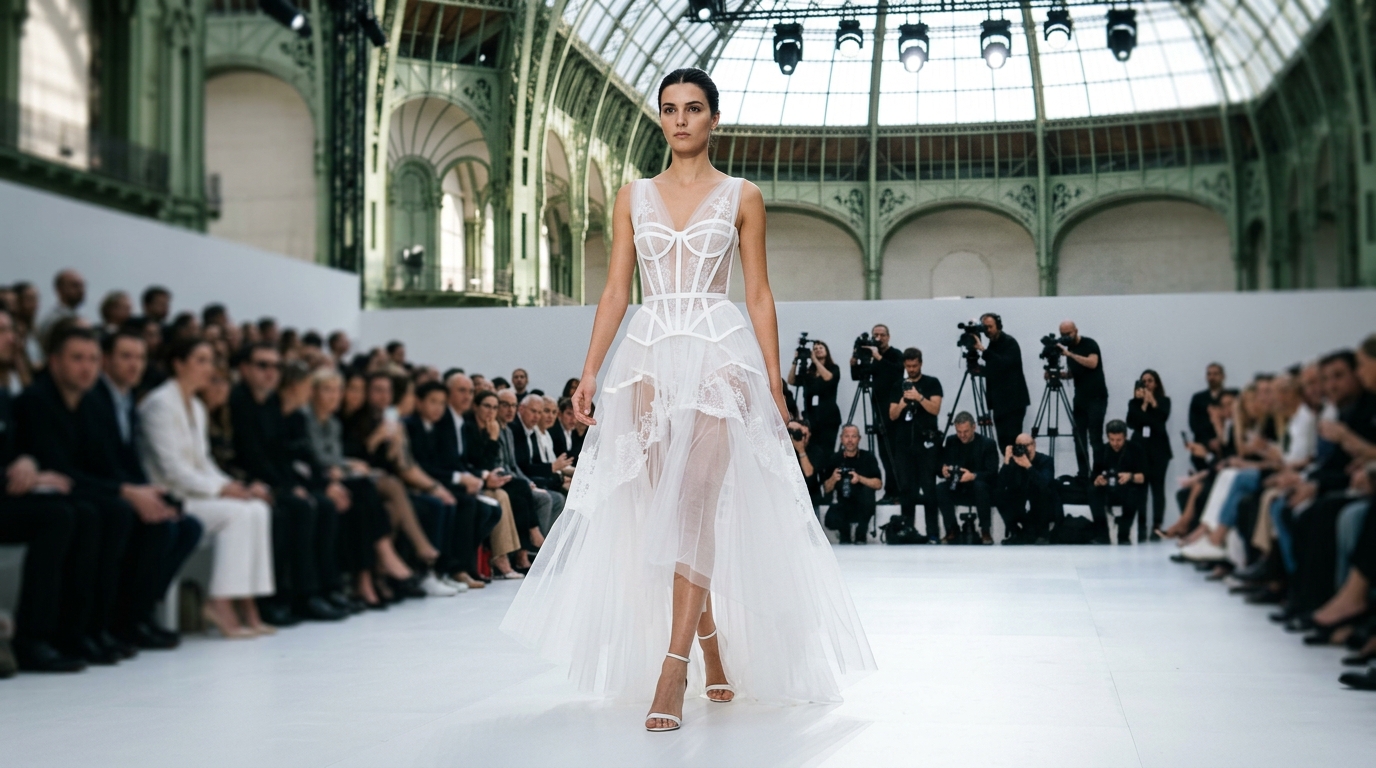
Evening pieces from the SS25 collection demonstrated Chiuri’s mastery of sensual dressmaking and her sophisticated understanding of how fabric, silhouette, and movement create emotional resonance. Slinky jersey sheaths in jewel tones—emerald, sapphire, amethyst—clung to the figure before erupting into asymmetric hem lengths, creating dynamism through proportion rather than embellishment alone. Some gowns featured dramatic one-shoulder necklines that echoed the collection’s Amazon warrior motif, positioning the body as both landscape and subject, while others employed subtle cut-outs at unexpected points—a sliver of midriff, an asymmetric hip opening, a revealing angle at the back—to maintain the season’s theme of controlled revelation. These cut-outs operated on multiple levels: formally, they created visual interest and lightness; conceptually, they suggested vulnerability within strength, exposure within power. Lace overlays created textural complexity, layering transparency with opacity to build visual interest without sacrificing the clean lines that defined the collection. The evening narrative positioned luxury not as excess but as intentionality: every element served a purpose, every detail contributed to a cohesive vision of modern femininity grounded in athleticism and grace. The use of jersey for evening pieces subverted conventional evening dressing, which typically demands stiffness and structure; instead, these flowing jersey gowns suggested that movement, malleability, and comfort could be compatible with luxury and elegance. Hemlines varied dramatically from piece to piece, with some floor-length and trailing while others featured asymmetric cuts that suggested motion frozen mid-gesture. Chiuri’s approach to evening dressing embraced the notion that contemporary evening wear need not replicate historical silhouettes but can instead propose new possibilities for how women might present themselves in formal contexts.
Accessories and Footwear
Accessories for Dior SS25 emphasized functional luxury and graphic statement-making, extending the collection’s core themes into every detail category. Lace-up sneaker-boots in pristine white or deep black provided grounding for the more experimental pieces, while structured shoulder bags in technical fabrics maintained the season’s athletic undertones throughout the composition. Jewelry appeared minimalist by design—clean lines, geometric forms, sharp angles—allowing the silhouettes and embroidery to command visual attention and preventing the overall composition from feeling overly decorated. Footwear ranged from sleek ballet flats that echoed dancewear aesthetics to architectural sneaker hybrids that merged sport technology with luxury materials, creating silhouettes that felt both performance-ready and fashion-forward. Belts with bold hardware references—hardware inspired by climbing equipment, carabiners, and archery gear—became functional sculpture, cinching waists and creating silhouette definition while also nodding to the collection’s athletic narrative. Even small accessories participated actively in the collection’s central conceit: headbands and hair clips referenced Olympic athletes and competitive sports, while belt hardware drew visual parallels to equipment used in archery and other precision sports. Bags featured utilitarian elements like snap closures and cargo pockets alongside luxury leather and construction, creating pieces that felt equally at home at the gym or at a black-tie event. Sunglasses featured oversized geometric frames that referenced both athletic wear and high fashion, demonstrating how contemporary luxury often exists at the intersection of these traditionally separate categories. The footwear palette extended the color story while maintaining functional grounding, with most pieces appearing in black, white, or neutral tones that would coordinate with the collection’s graphic prints and bold colors.
Verdict
The Dior Spring/Summer 2025 ready-to-wear collection represents Maria Grazia Chiuri at her most confident and thematically coherent. By anchoring the collection in the Amazone silhouette—a foundational Dior archetype dating to Christian Dior’s own design innovations—and reinterpreting it through contemporary sportswear and graphic design traditions, Chiuri created a narrative about powerful femininity that feels neither forced nor nostalgic. The asymmetric necklines, strategic cut-outs, and architectural tailoring work in concert to create silhouettes that suggest movement, readiness, and agency without sacrificing elegance or craft. The tension between austere sportswear fundamentals and intricate embellishment, between bold graphic prints and minimal jewelry, demonstrates sophisticated design thinking that respects both historical precedent and contemporary values. While some critics questioned whether the sportswear focus belonged in the main ready-to-wear collection, the SS25 offering proves conclusively that athleticism and luxury need not occupy opposing territories. This is a collection that celebrates women on their own terms, grounded in genuine appreciation for Dior heritage while boldly projecting toward a more dynamic and inclusive future. Chiuri’s vision ultimately suggests that femininity expressed through strength represents the most revolutionary statement fashion can make in the current moment.