Comme des Garçons Spring/Summer 2025: An Air of Hope to Blow Away Gloom
Rei Kawakubo’s Spring/Summer 2025 collection for Comme des Garçons arrived at Paris Fashion Week like a profound meditation on uncertainty, wrapped in sculptural forms and transparent fabrics that challenge the very definition of wearable fashion. Presented under the thematic banner “Uncertain Future,” this collection represents one of Kawakubo’s most conceptually ambitious and visually striking offerings in recent seasons. Rather than retreating into despair amid today’s fractured geopolitical and social landscape, Kawakubo proposes an alternative: that confronting uncertainty with “air and transparency” might constitute a form of hope. The collection explores the delicate balance between protection and confinement, vulnerability and strength, through pieces that function as much as sculptural statements as they do garments. From rigid white architectural forms that resemble fiberglass installations to quilted silhouettes adorned with cultural textile references, each look tells a story of transformation and resilience. The presentation itself became a powerful statement about fashion’s capacity to address contemporary anxieties while maintaining uncompromising artistic vision.
The Collection
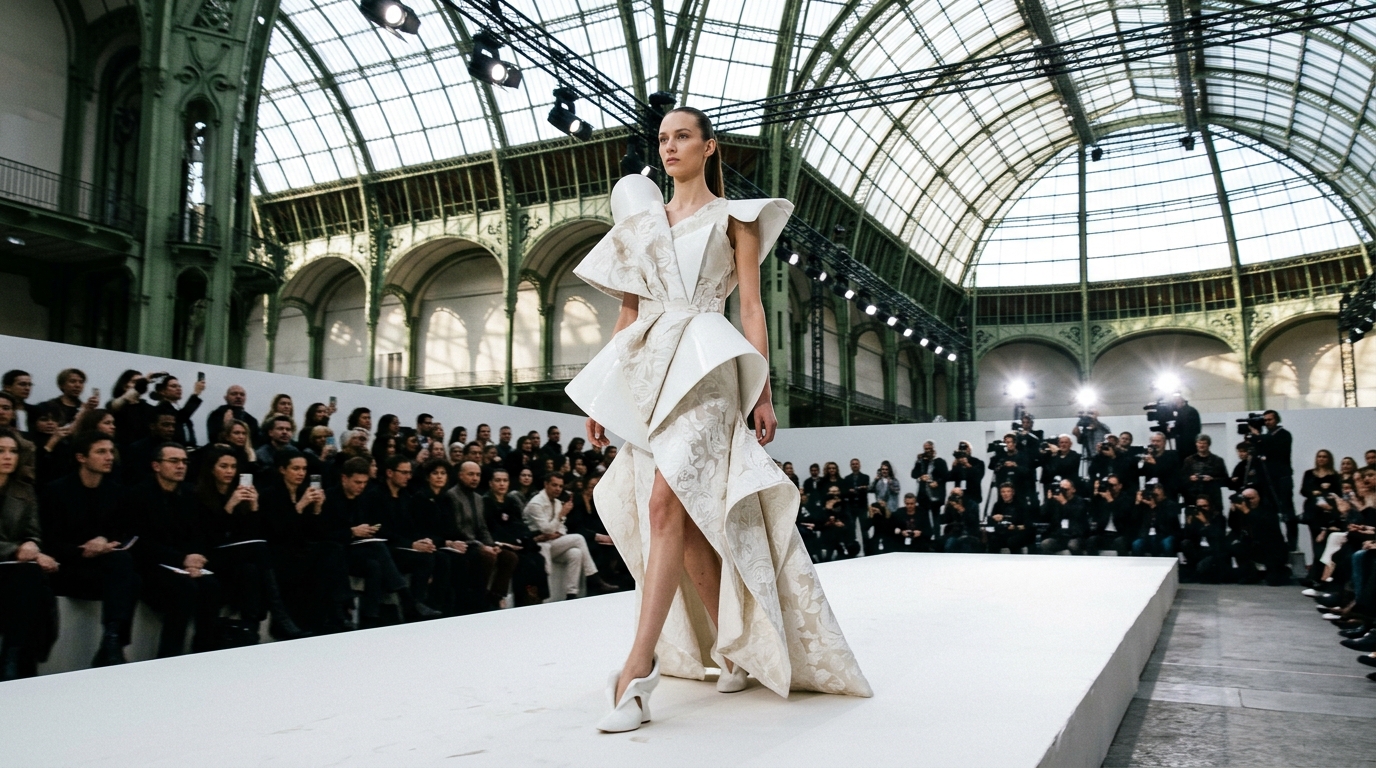
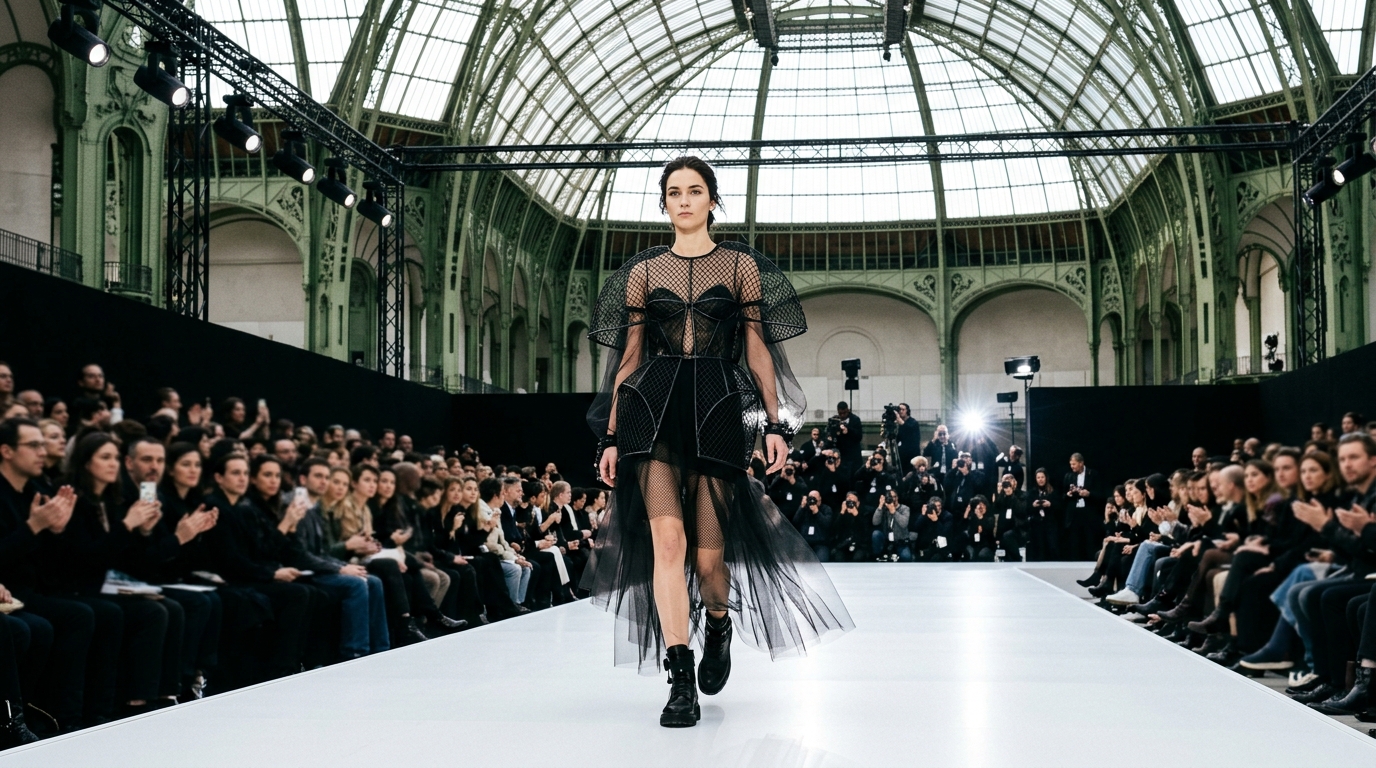
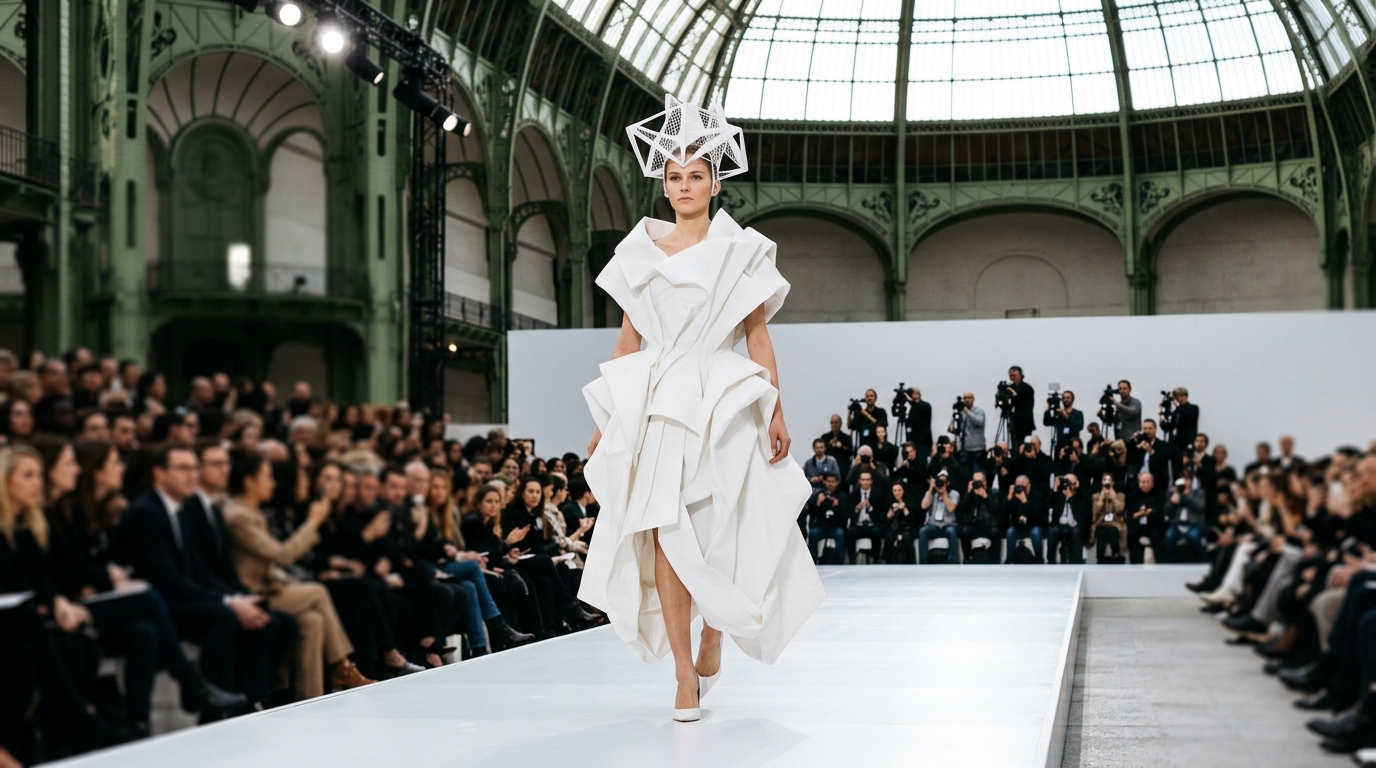
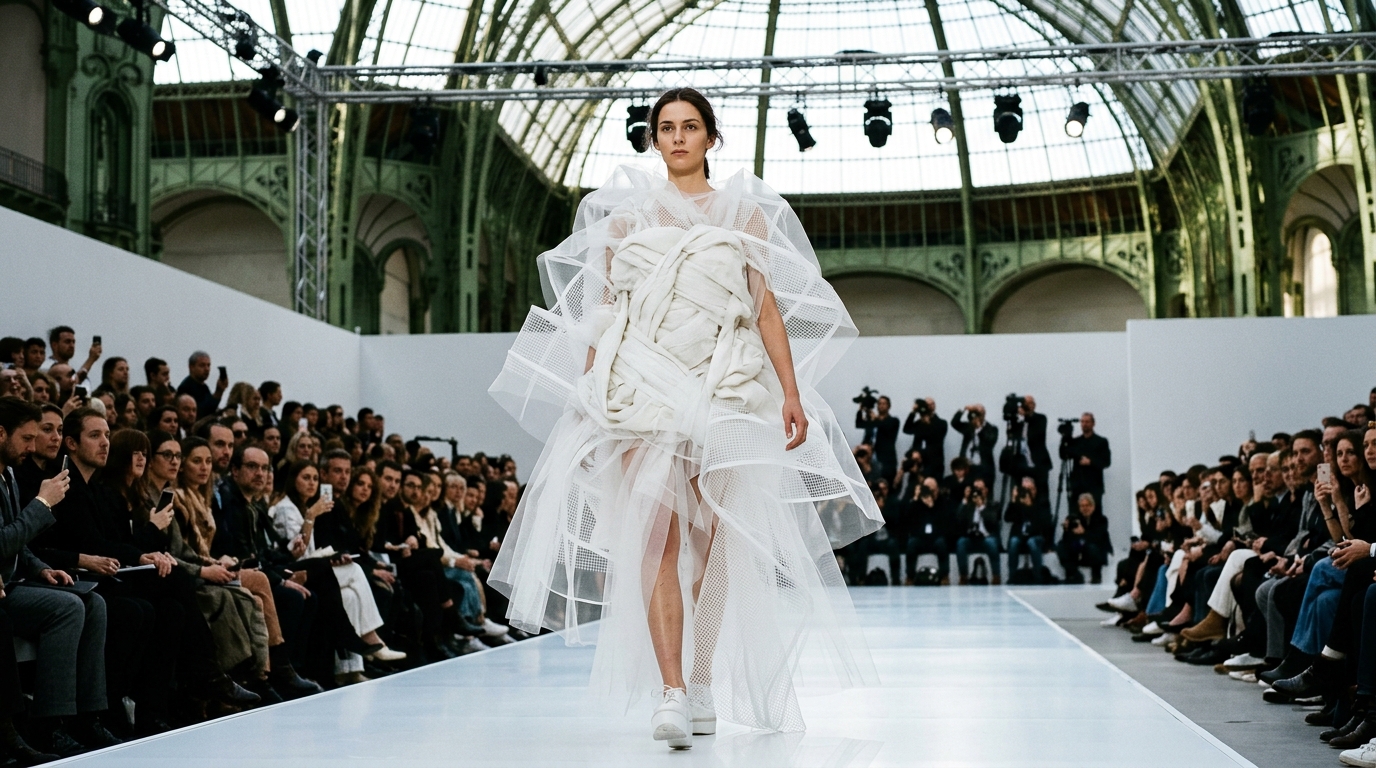
Rei Kawakubo’s Spring/Summer 2025 collection for Comme des Garçons, titled “Uncertain Future,” confronts the complexities of today’s fractured world with unrelenting architectural abstraction paired with intimate human vulnerability. Presented at Paris Fashion Week in September 2024, the 47-look collection suggests that confronting uncertainty with transparent materials and ethereal forms might signify a kind of quiet hope emerging from chaos. The designer explores themes of protection and entrapment through sculptural silhouettes, puffy gowns, and oversized architectural forms that simultaneously evoke both safety and confinement. Opening looks featured dramatically rigid white pieces that resembled museum-quality fiberglass sculptures rather than conventional garments, setting an immediate tone of artistic experimentation over commercial wearability. Kawakubo’s signature approach of building garments outward from the body creates cocoon-like structures that encase the wearer, provoking questions about where personal autonomy ends and protective structure begins. The collection’s narrative arc moves from fortress-like rigidity through increasingly ethereal interpretations, suggesting that acceptance of uncertainty might liberate us from the need for absolute protective barriers. Metal mesh cages interlaced with transparent tulle, bundles of carefully folded fabric contained within architectural frameworks, and silhouettes that seem to float independently from the body create a collection that operates in a space between fashion, sculpture, and performance art. The color palette predominantly features whites, blacks, and neutral tones that enhance the architectural qualities, allowing the viewer to focus entirely on form, volume, and the relationships between covered and exposed areas of the body.
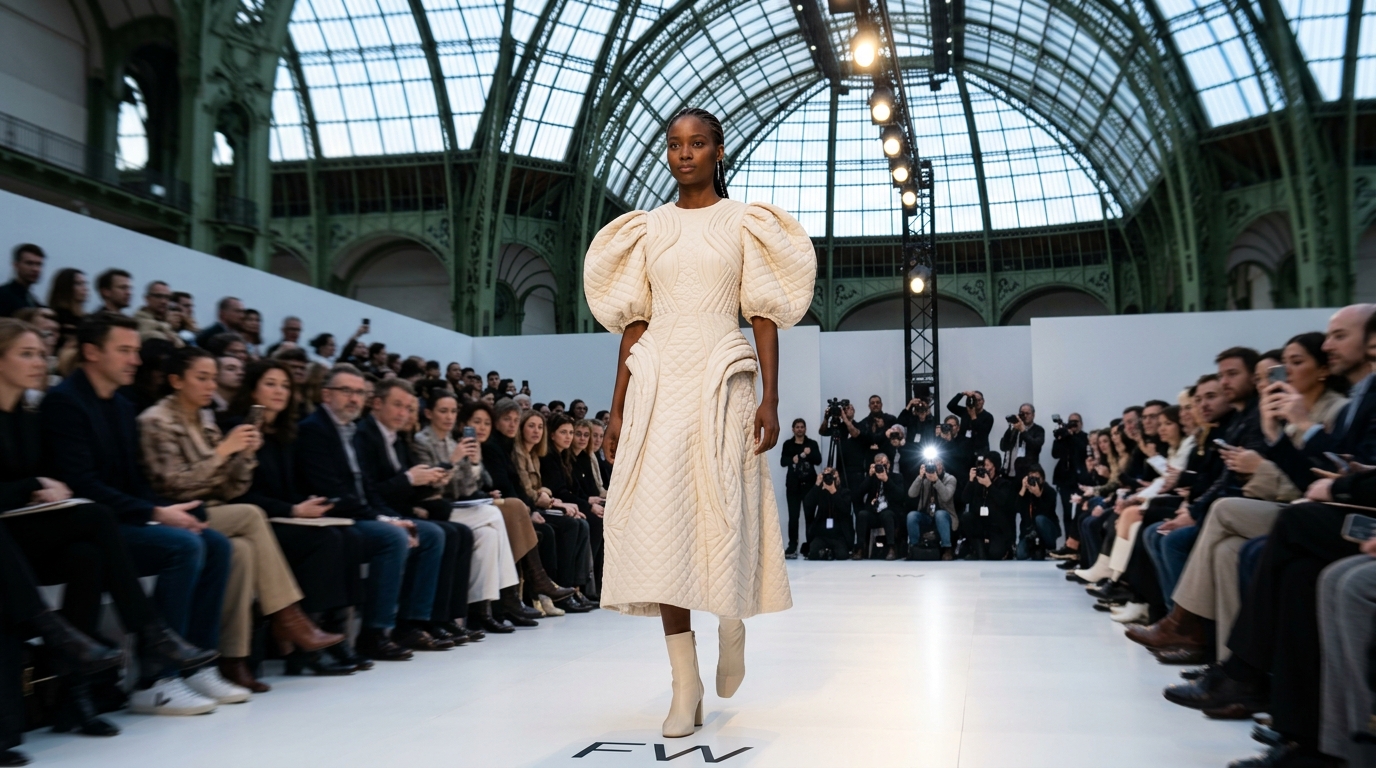
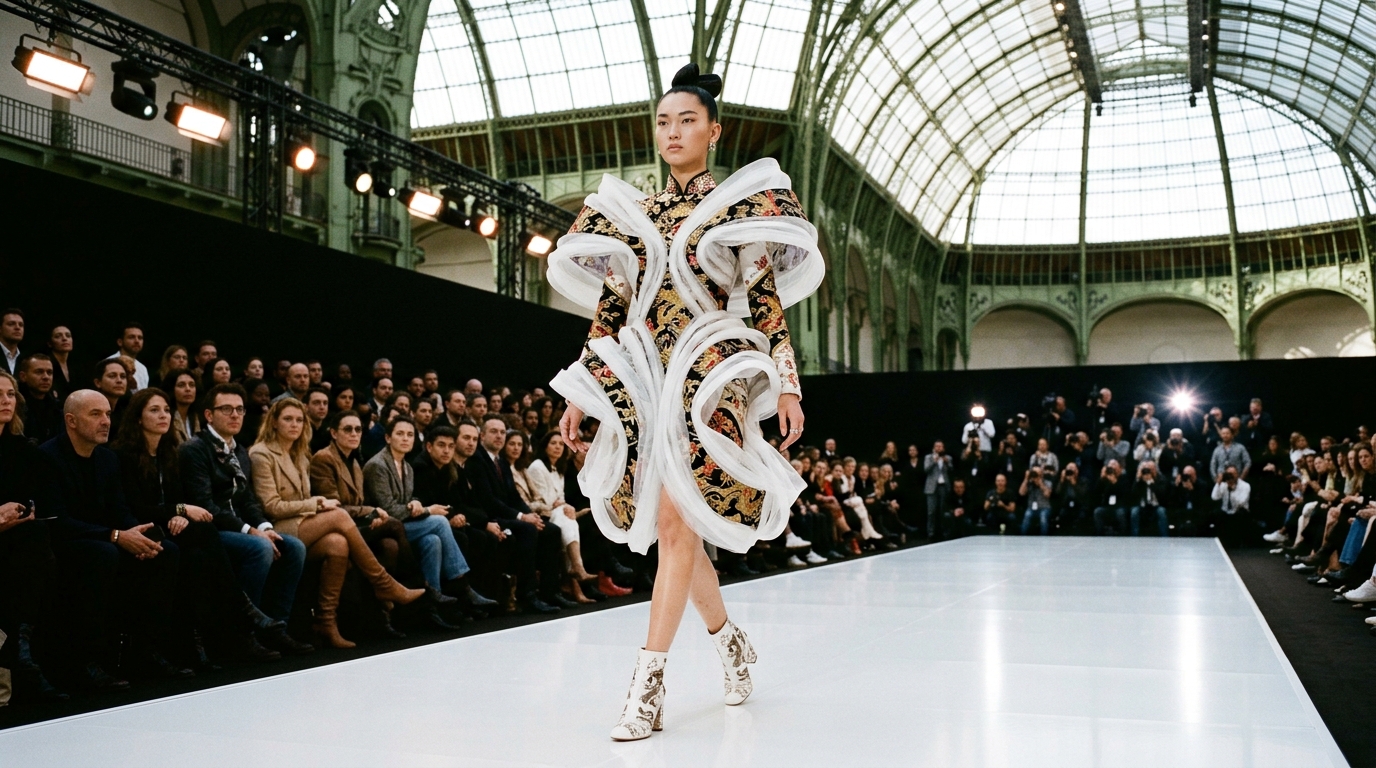
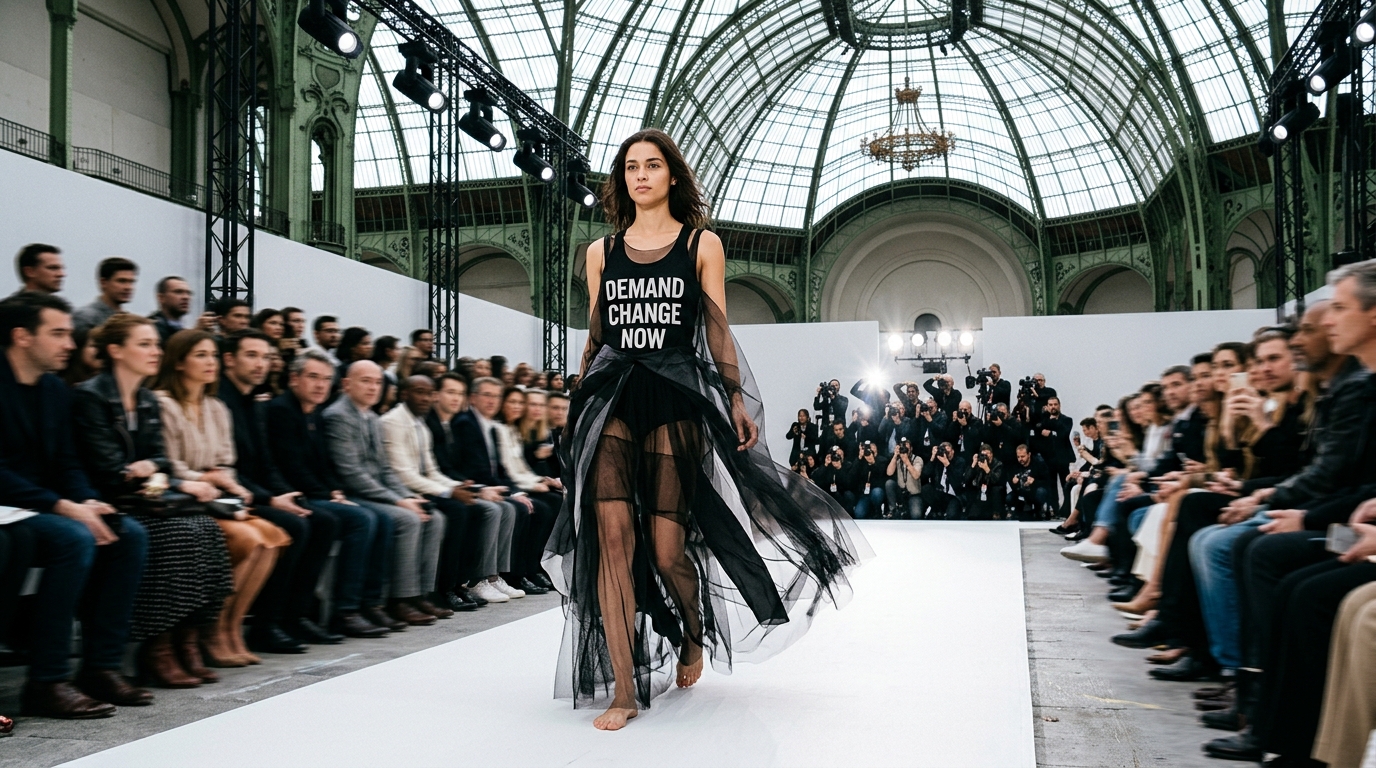
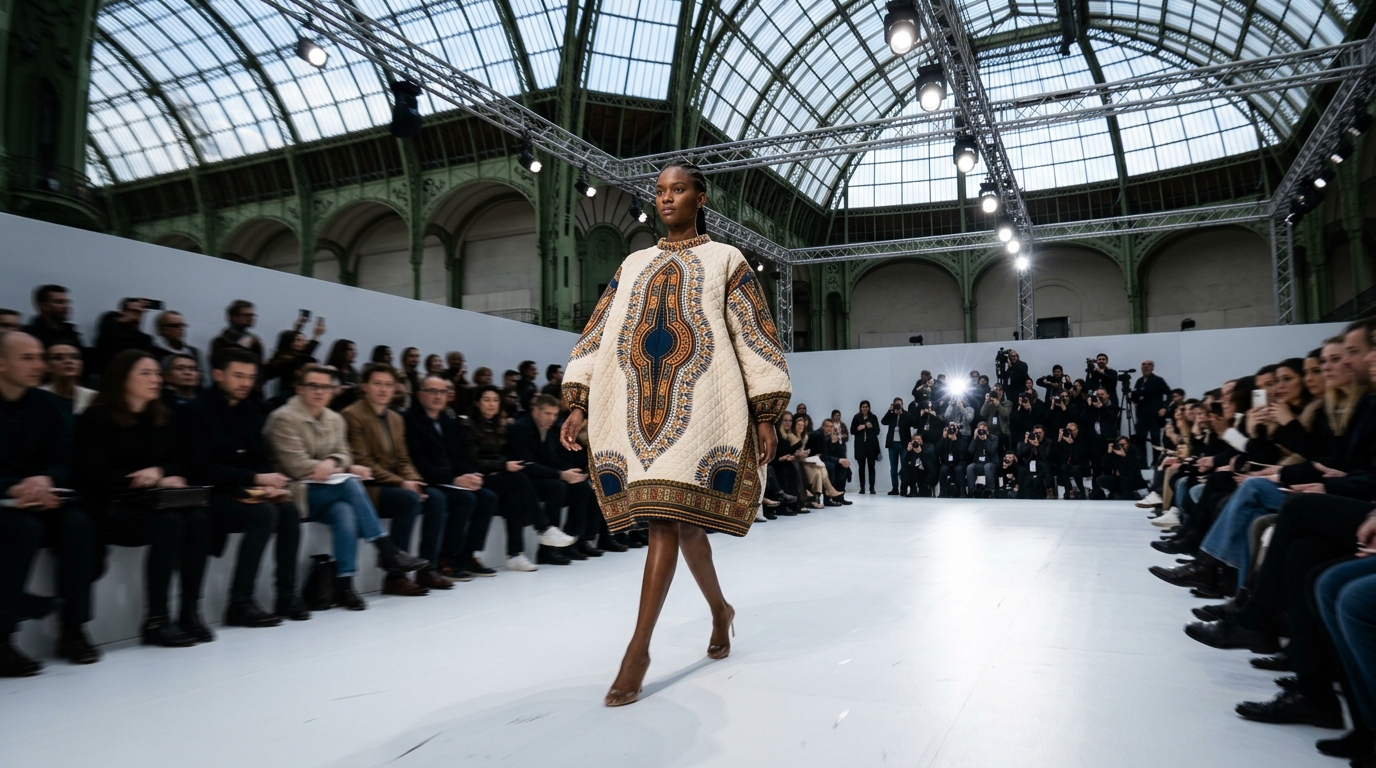
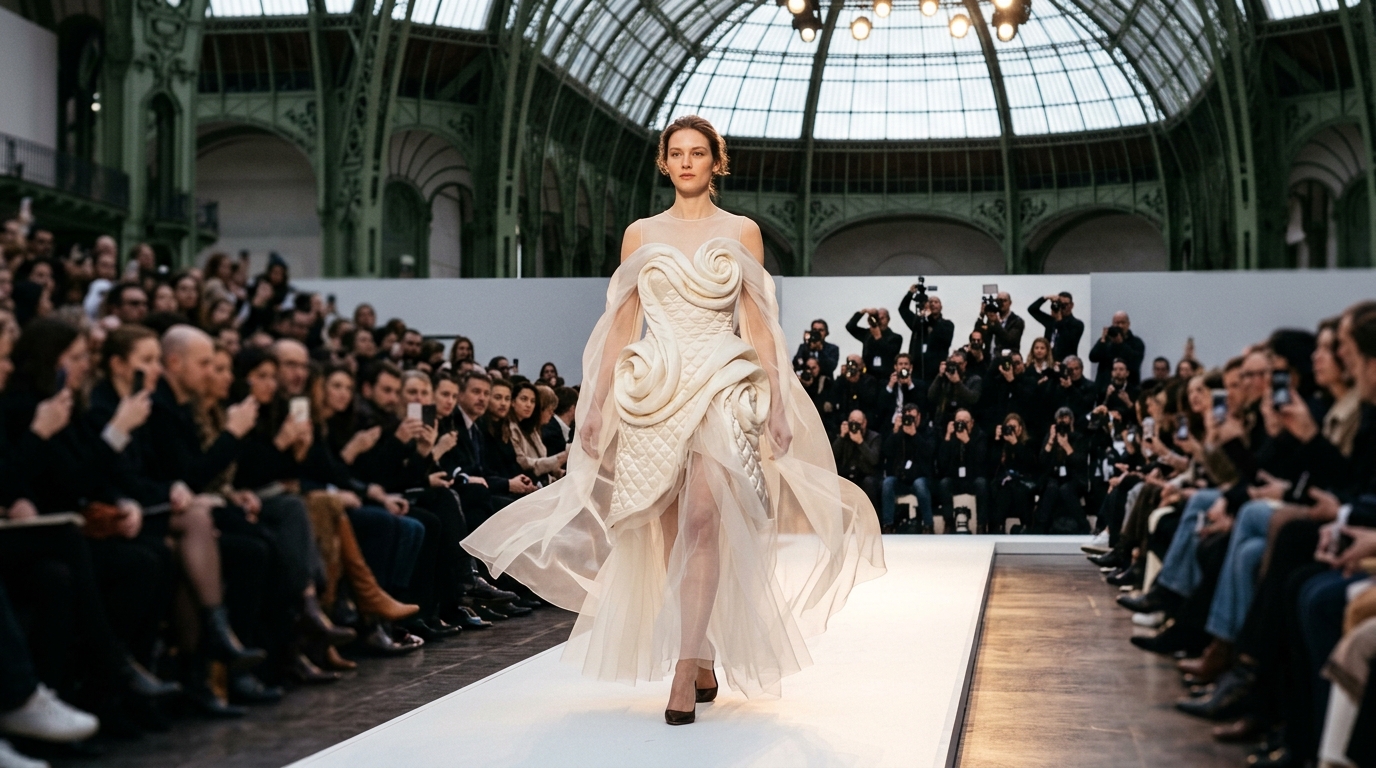
The collection opens with dramatic, rigid white pieces that resemble fiberglass sculptures rather than wearable garments, establishing Kawakubo’s commitment to pushing beyond conventional fashion boundaries. She incorporates her signature architectural approach, featuring Doric ridges, geometric forms, and structural elements that gradually transform as the show progresses into the middle and closing sections. The rigid structures and stiffened materials softly give way to quilted silks, oversized sleeves, and more fluid interpretations that create a sophisticated narrative arc blending historical architectural references with decidedly futuristic design sensibilities. Jacquards throughout the collection evoke both Asian and African textile traditions, adding layers of cultural complexity and global consciousness to the silhouettes. The collaboration with headpiece designer Takuto Kadokura introduces geometrical forms inspired by his “22nd Century Jedi” exhibition, bringing science-fiction aesthetics into conversation with fashion. Subtle protest messaging appears woven throughout, with glimpses of slogans such as “Protect our…” visible on select pieces, grounding the collection’s abstraction in real-world political concerns. The progression from stiffened, tower-like structures to softer, more organic shapes allows the collection to function as visual metaphor for human adaptation and resilience. Transparent overlays, mesh layers, and strategic cutouts work together to create vulnerability within architectural containment, suggesting that true strength might emerge from acknowledging our fragility rather than attempting to armor ourselves against it. The collection’s final looks merge all these elements—quilted fabrics, transparent materials, sculptural headpieces, and subtle protest elements—into pieces that feel simultaneously hopeful and grounded in the complex realities of contemporary life.
Architectural Innovation and Sculptural Form
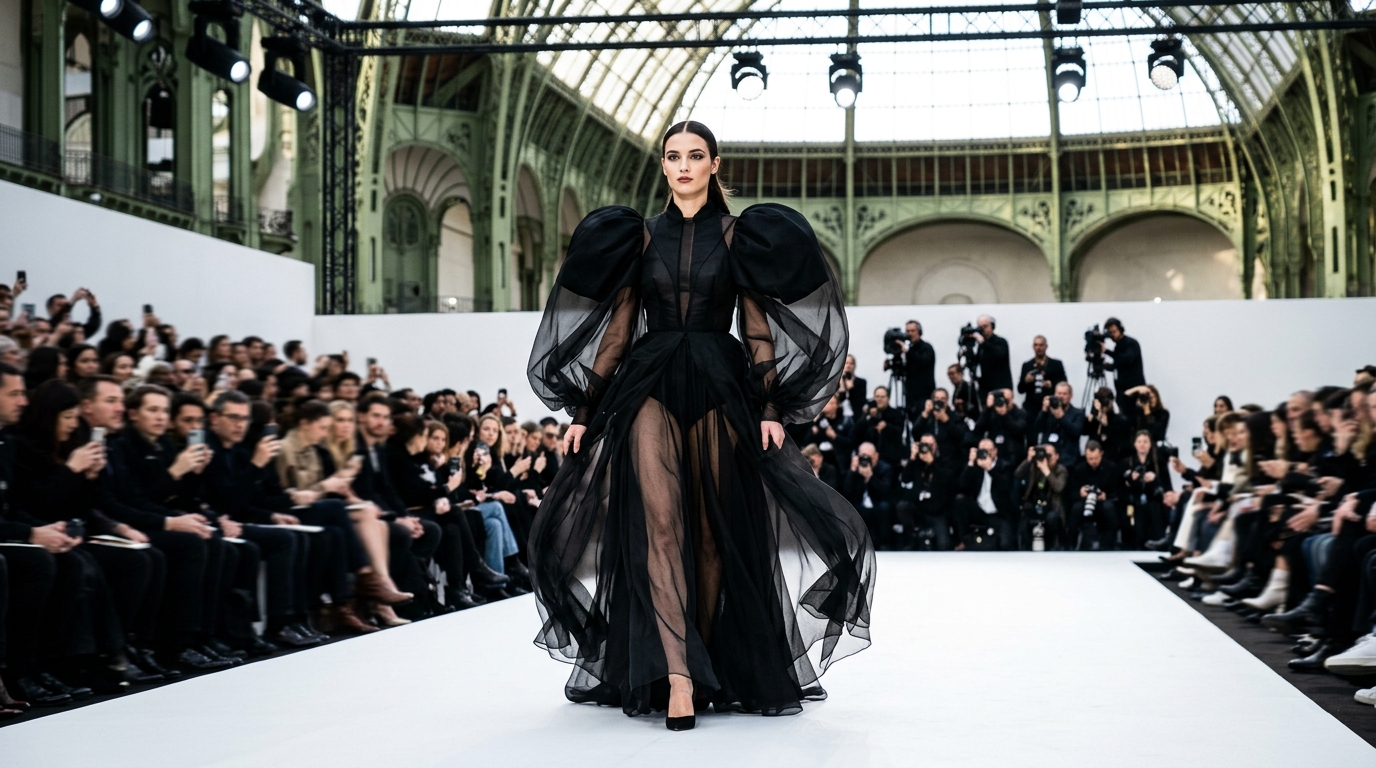
Kawakubo’s SS25 collection showcases her most abstractly architectural work in years, with garments that challenge fundamental assumptions about the relationship between clothing and the human body. Dresses feature extraordinary sculptural elements that encase wearers in stiff cone structures constructed from fancy floral jacquard and reinforced with architectural frameworks that seem borrowed from contemporary art installations. Others incorporate portable fabric fitting rooms—essentially portable garment structures that transform the wearer into a living artwork—and complex bundles of fabric carefully encased in layers of tulle or stiffened mesh structures. Metal mesh components create literal cages that simultaneously suggest both safety and confinement, reflecting the collection’s thematic preoccupation with protective structures that might also constrain. Puffy architectural gowns dominate the collection’s middle section, with quilting techniques that add volume and dimension while maintaining sculptural integrity. Geometric headpieces by Takuto Kadokura, inspired by his “22nd Century Jedi” exhibition, crown many of the most striking looks, adding a distinctly futuristic dimension that elevates each silhouette into pure conceptual territory. Elements of protest appear subtly but deliberately throughout, with glimpses of slogans such as “Protect our…” visible on carefully selected pieces, connecting the collection’s formal experimentation to concrete political and social concerns that transcend the fashion world.
Material Exploration and Textile Significance
The collection relies upon a carefully orchestrated palette of whites, blacks, and neutral tones, punctuated strategically by moments of unexpected vibrancy and textile pattern. Quilted silks dominate multiple sections, with intricate patterns that reference both historical textile traditions and distinctly contemporary design approaches. Jacquard techniques throughout the collection showcase patterns inspired by African and Asian textile traditions, bringing global cultural consciousness to the foreground of the collection’s visual narrative. Transparent fabrics—including gauze, tulle, and various mesh materials—create a consistent sense of vulnerability and exposure, allowing viewers to glimpse the architecture beneath while maintaining an ethereal quality. In contrast, heavily stiffened materials provide rigid architectural structure and support, creating the visual tension that runs throughout the collection. The sophisticated interplay between opaque and transparent elements, between soft and rigid materials, reinforces Kawakubo’s central meditation on fragility and resilience. Certain pieces layer these materials with mathematical precision, building complex relationships between coverage and exposure that reflect the collection’s thematic concerns with protection and revelation. The material choices themselves become philosophical statements—choices of transparency over opacity, of lightness over burden, suggesting specific responses to contemporary uncertainty.
Presentation Impact and Fashion Statement
The presentation at Paris Fashion Week showcased Kawakubo’s unwavering commitment to pushing the boundaries of what fashion can express and accomplish. Models walked the runway wearing pieces that fundamentally challenged conventional notions of wearability, with many silhouettes functioning explicitly as sculptural statements and conceptual art rather than practical garments intended for everyday wear. The careful progression of the collection told a compelling story of transformation, moving from rigid, fortress-like structures that appear protective and confining toward softer, more organic forms that suggest acceptance and openness. The overall effect was simultaneously confrontational and hopeful, inviting viewers to reconsider their relationship with uncertainty, change, and the structures—both literal and metaphorical—that shape our daily existence. The runway itself became a stage for philosophical inquiry, with each look posing questions about human vulnerability, artistic expression, and the role of fashion in addressing contemporary anxieties. This collection demonstrates that fashion remains capable of genuine cultural commentary when approached with the conceptual rigor and artistic integrity that have always defined Comme des Garçons’ practice. The audience response reflected recognition of the collection’s significance, acknowledging that Kawakubo continues to operate at the highest levels of fashion creativity and cultural relevance.
Verdict
Comme des Garçons’ Spring/Summer 2025 collection stands as a definitive testament to Rei Kawakubo’s unwavering commitment to innovation, conceptual rigor, and artistic integrity in an era when fashion often retreats into commercialism and trend-chasing. The “Uncertain Future” collection doesn’t shy away from the genuine anxieties of our contemporary moment; instead, it proposes something far more sophisticated and ultimately more hopeful. Through transparency, architectural abstraction, and the deliberate deployment of protective structures, Kawakubo suggests that acknowledging uncertainty might be the first step toward genuine liberation and resilience. This collection will undoubtedly inspire a generation of designers, challenge audiences to reconsider what fashion can accomplish, and continue the Comme des Garçons legacy of pushing the medium forward into uncharted and conceptually rich territories. The dialogue between protection and exposure, between sculptural form and human fragility, creates a collection that transcends seasonal fashion to become a genuine statement about contemporary existence. In an industry saturated with noise and commercial pressure, Kawakubo’s vision remains a beacon of artistic authenticity and cultural relevance.