Alexander McQueen Spring/Summer 2025: Seán McGirr Conjures Banshee Magic in Paris
Seán McGirr’s highly anticipated sophomore collection for Alexander McQueen arrived at Paris Fashion Week as a confident and assured step forward for the talented Irish designer, demonstrating maturity and creative vision beyond what his acclaimed debut had suggested. Presented at the historic École Nationale Supérieure des Beaux-Arts on September 28, 2024, the Alexander McQueen SS25 2025 ready-to-wear show merged personal Irish heritage with the house’s distinctive dark romanticism through an unexpected and sophisticated muse: the banshee, a creature from Celtic folklore embodying both danger and transcendent femininity. McGirr drew directly from his childhood memories and from Alexander McQueen’s own 1994 archival Banshee runway show, crafting a collection that transforms Celtic folklore and supernatural mythology into compelling contemporary fashion. Through sharp, deliberately twisted tailoring layered with ethereal hand-finished fabrics and striking silver embellishments creating visual and conceptual tension, the SS25 collection proved definitively that McGirr has found his distinctive voice within one of fashion’s most iconic and historically significant houses. The collection balanced commercial appeal with uncompromising artistic vision, technical mastery with accessible silhouettes, and dark heritage narratives with luminous, optimistic execution that felt fresh and vital rather than precious or overdetermined.
The Collection
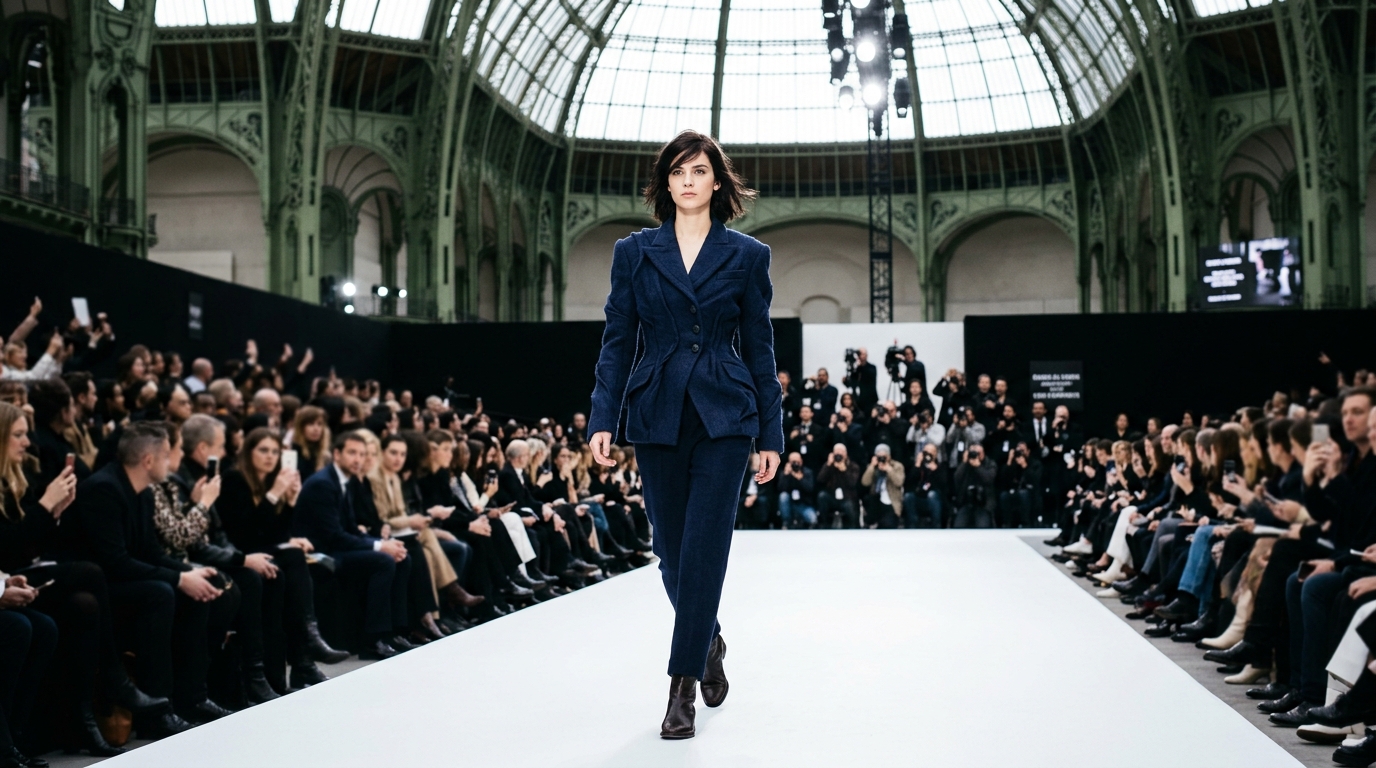
The Alexander McQueen SS25 collection emerged as a sophisticated meditation on duality and contradiction—sharp versus soft, solid versus ethereal, dark Celtic heritage versus luminous, light-reflecting execution, violence reimagined as textile manipulation versus beauty as the ultimate goal. McGirr drew direct and personal inspiration from the banshee, a solitary, foreboding female spirit originating in Irish folklore, while also deliberately referencing McQueen’s own celebrated 1994 Banshee runway show, creating a dialogue between his personal heritage and house history. This personal and emotional connection felt entirely authentic and earned; McGirr had shared in interviews that he remembered his mother recounting childhood stories of the folkloric spirit’s haunting cries, making this not merely a conceptual gesture but something rooted in genuine lived experience. Rather than creating costume drama or theatrical decoration divorced from wearability, McGirr translated this supernatural and culturally significant muse into modern silhouettes through a sophisticated approach to tailoring innovation and embellishment strategy. The collection opened with nipped-in jackets whose lapels had been deliberately pinched and stitched closed, establishing the twisted aesthetic—suggesting gentle violence or architectural manipulation—that would define and unify the entire offering thematically. British suiting traditions, deeply embedded in the house’s DNA, were deliberately subverted through hand-manipulation of seams, unconventional construction, and what McGirr termed ‘twisted tailoring,’ creating a sense of intentional distortion that felt artful rather than accidental. Every single garment carried McGirr’s distinctive fingerprint—thoughtful in conception, precise in execution, and distinctly personal in vision.
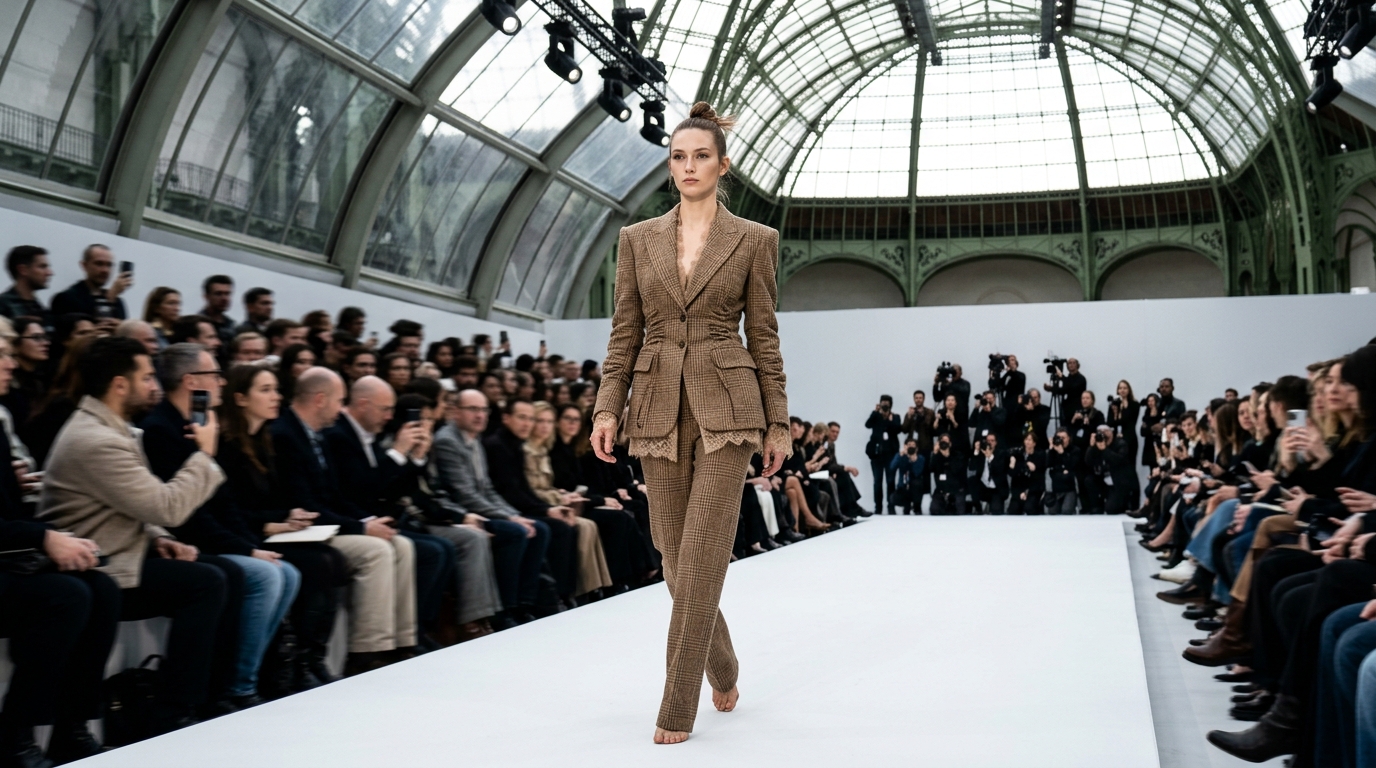
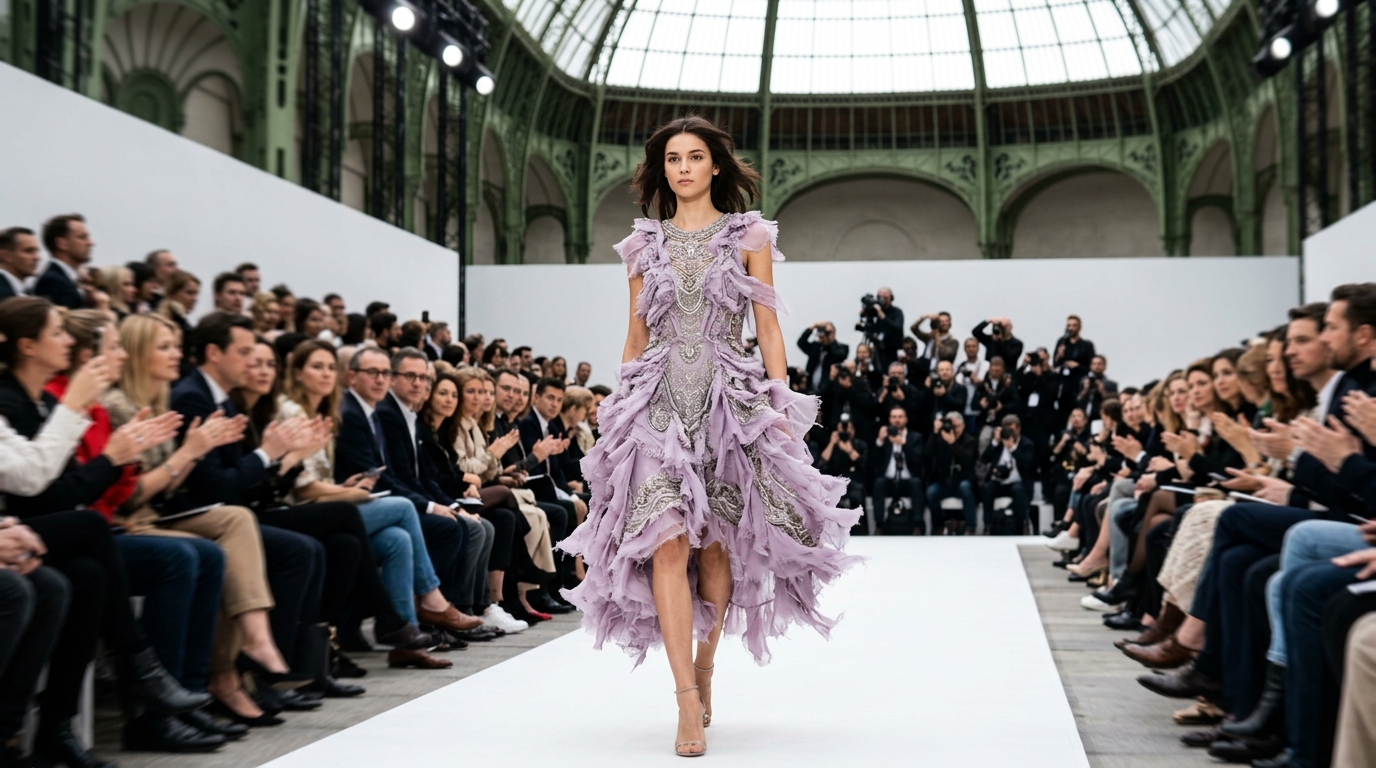
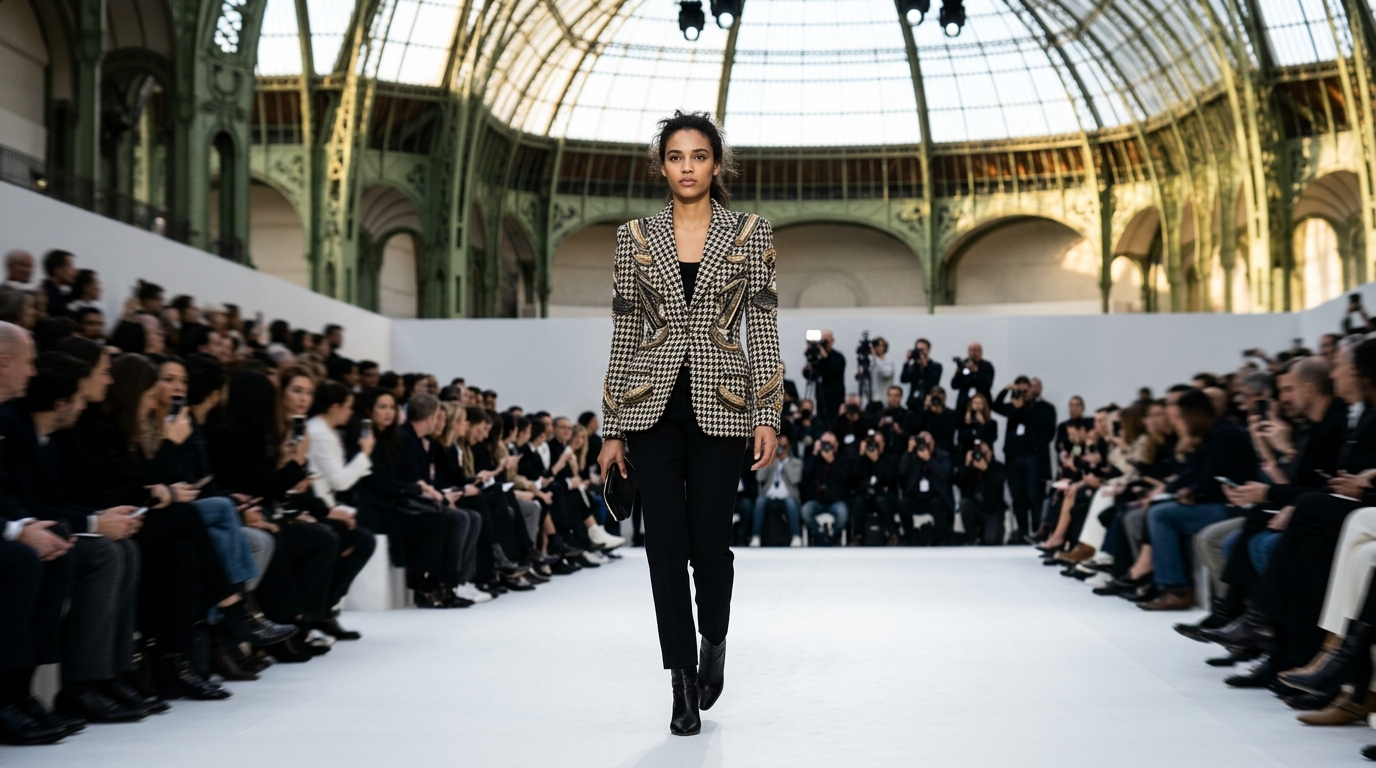
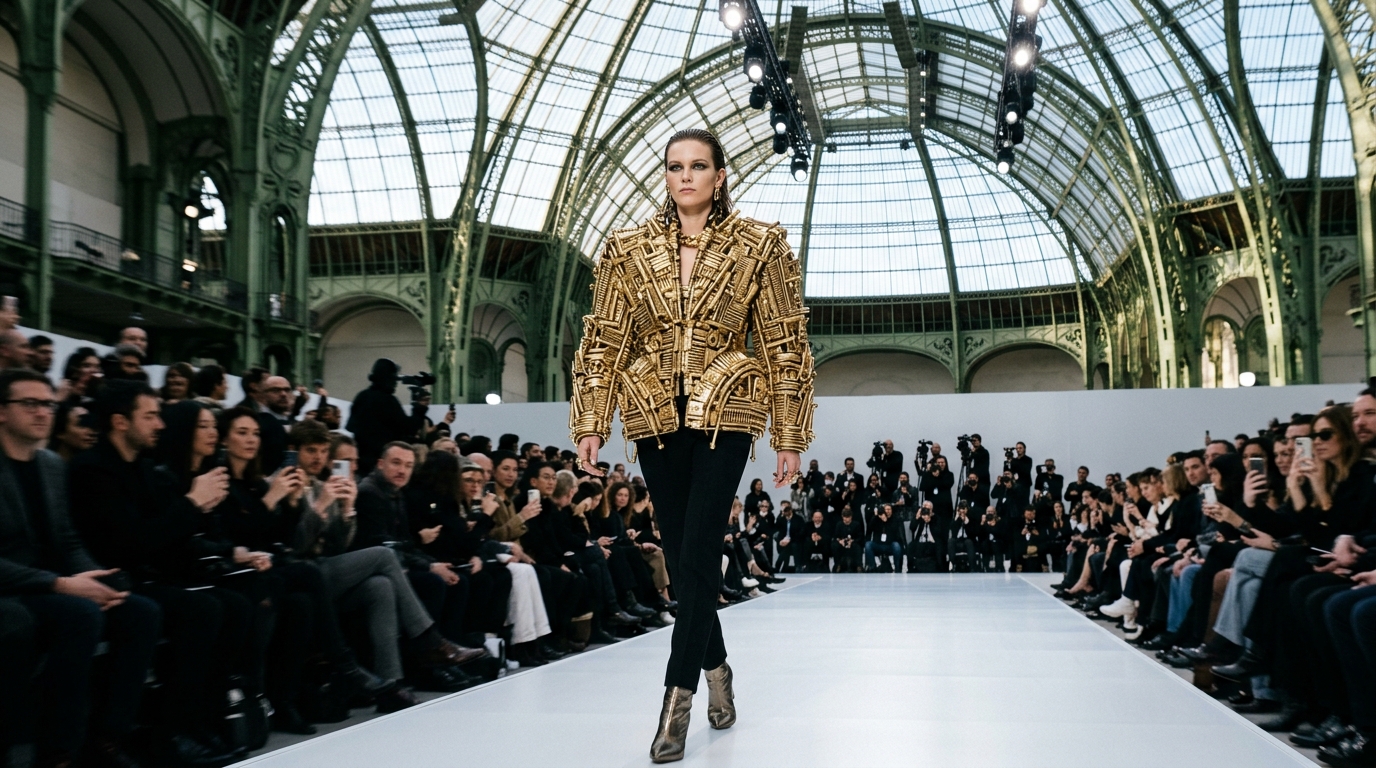
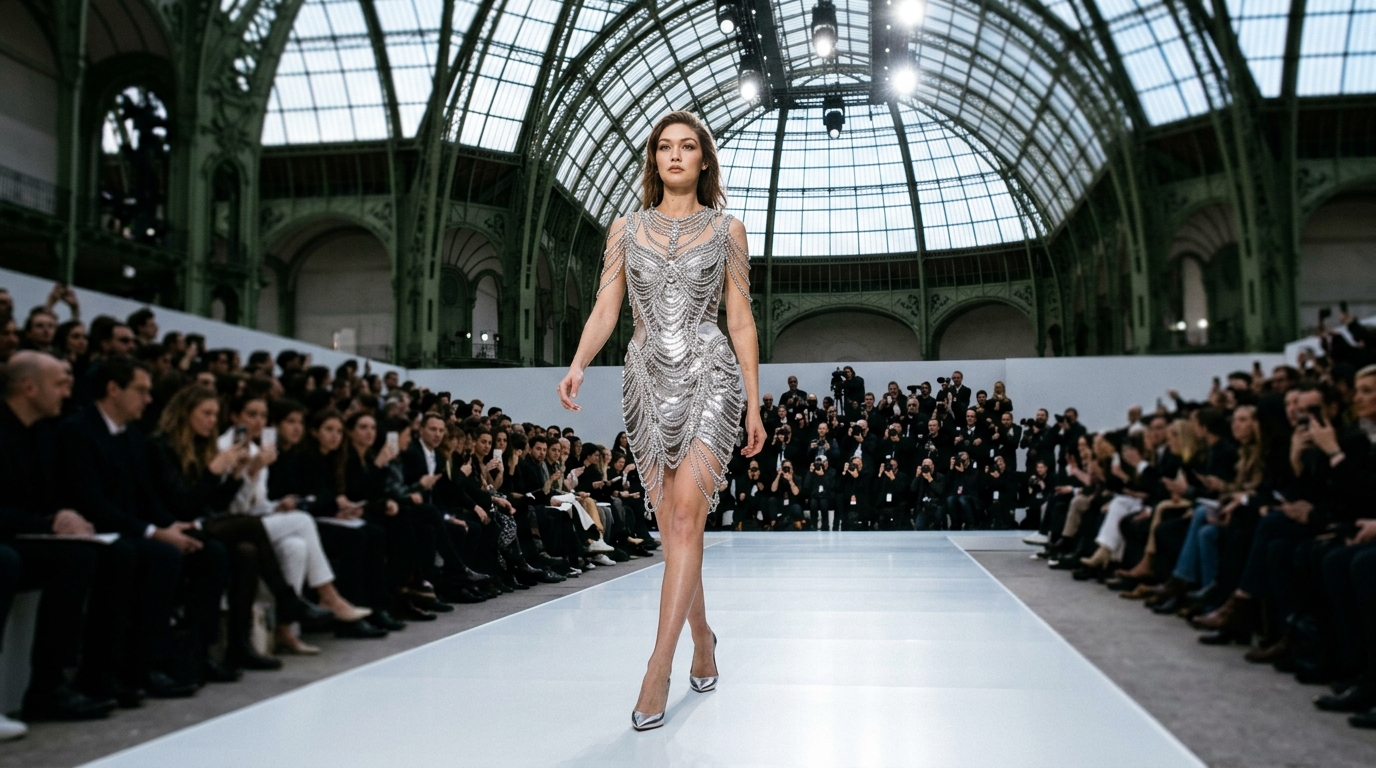
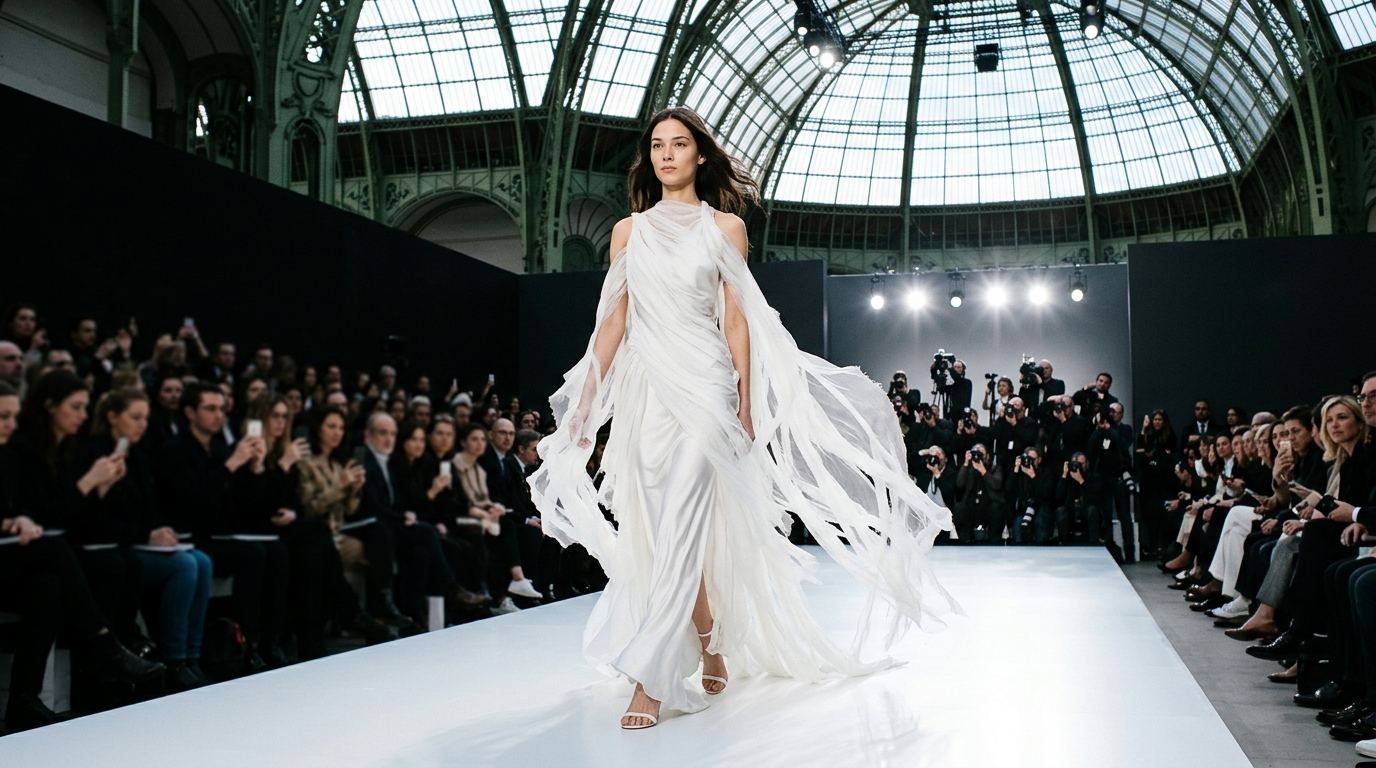
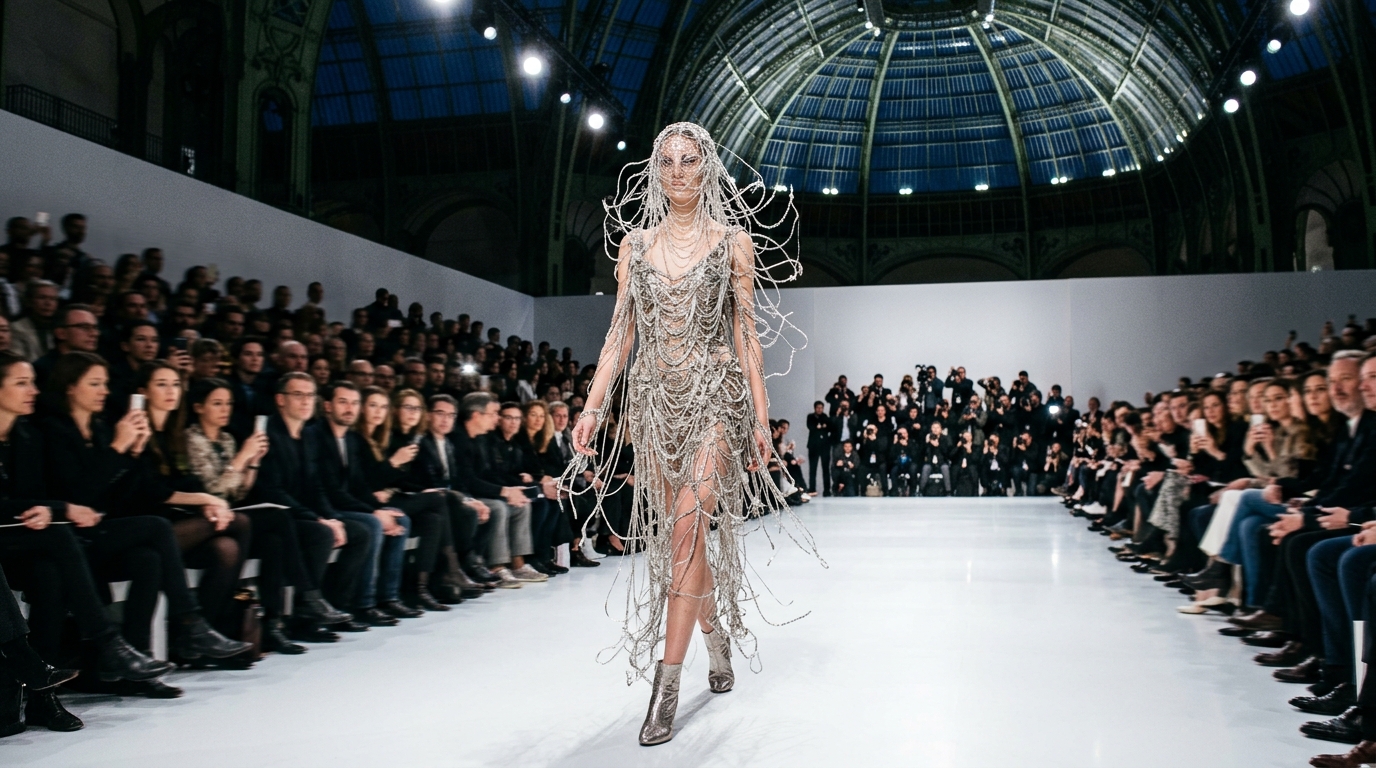
McGirr’s overarching design philosophy for SS25 centered on dissolving the rigid boundaries of traditional tailoring through innovative layering strategies, deliberate shredding, and hand-executed embroidery appearing throughout. The fabrications were selected with meticulous care and included lightweight wool mohair woven in prestigious British mills, hand-shredded and meticulously finished silk organza creating texture and movement, cobweb lace hand-stitched throughout pieces, delicately pleated chiffon offering weightlessness and fluidity, and lustrous silk crepe de chine providing structure. The color palette ranged from sophisticated neutrals including navy and tobacco check to black and ivory houndstooth in precisely tailored pieces, while special embellished silks introduced unexpected moments of color: lilac, pristine white, and silver tones that suggested otherworldliness and supernatural luminescence. The designer employed hand-stitching techniques extensively throughout the collection, particularly in the creation of intricate cobweb lace details that appeared as delicate layers, suggesting both deconstruction and luxury craft simultaneously. Silver bullion embroidery and glittering metal elements became signature motifs recurring across multiple pieces, functioning as both surface decoration and three-dimensional architectural elements. Some pieces incorporated unconventional materials including screws, nuts, and chains as deliberately three-dimensional embellishments, creating visual texture while referencing hardware aesthetics and the notion of jewelry made from unexpected materials. A striking series of gold jackets seemed almost constructed entirely from metallic components arranged with architectural precision, while the collection’s dramatically compelling finale featured a gown fashioned ingeniously from thin ropes of glittering metal and silver chains arranged in tangled, ghost-like configurations. This technical innovation and material fearlessness demonstrated McGirr’s willingness to push conventional fabrication boundaries and challenge what constitutes appropriate garment construction while maintaining the elegant silhouettes that define contemporary McQueen design philosophy.
Silhouettes and Standout Pieces
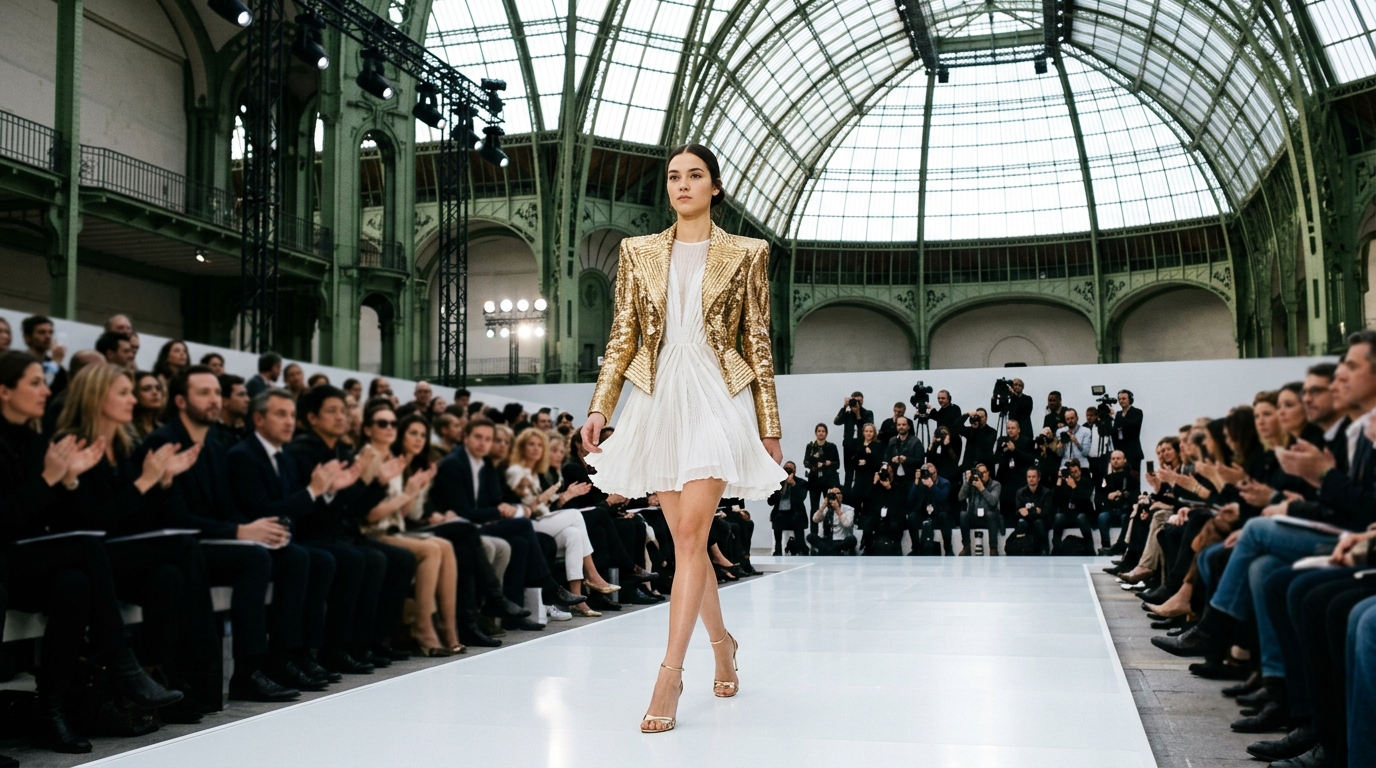
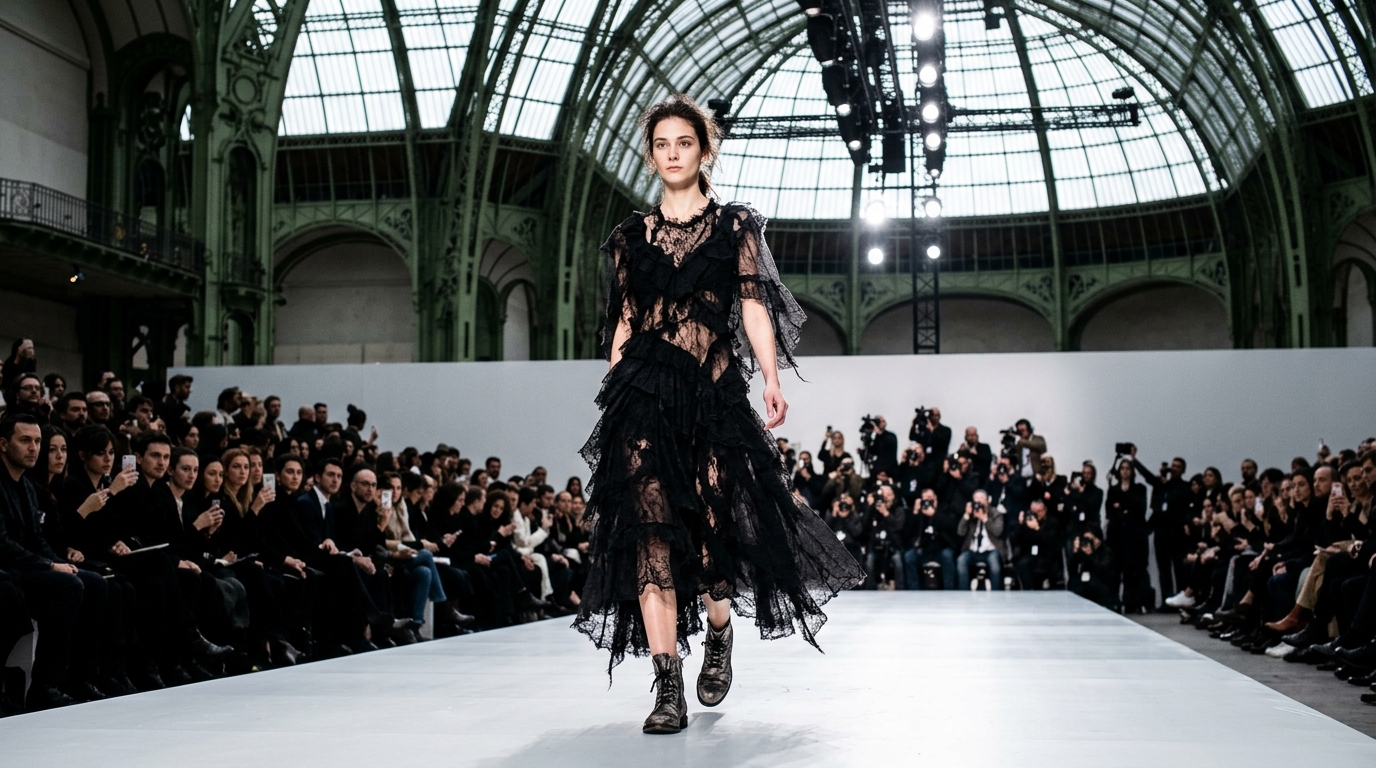
The Alexander McQueen SS25 silhouettes ranged impressively from severe, architectural suiting to ethereal and weightless eveningwear, each constructed with meticulous attention to pattern-cutting precision and hand-finished detail work that elevated execution. Opening looks established sharp, pinched shoulders and deliberately bunched lapels that suggested violence and disruption reimagined through innovative textile manipulation rather than literal aggression. The silhouettes occupied an interesting middle ground between ready-to-wear functionality and couture-level craftsmanship. Moving through the collection’s progression, pleated chiffon dresses in soft lilac featured intricate silver bullion embroidery tracing abstract, almost calligraphic patterns across the body, creating visual movement across static forms. A particularly memorable mini dress paired brushed white chiffon—delicate and weightless—with a gold sequined jacket of architectural structure, creating compelling textural and conceptual contrast between opposing design approaches. Hand-combed lace sets with deliberately distressed and aged finishes suggested simultaneous deconstruction and luxury, with the distressing appearing as intentional design choice rather than wear or damage. The collection’s most visually memorable pieces employed hand-shredded silk georgette and ruffled layers that created dynamic movement and substantial textural interest even in stillness. Handbags and jewelry incorporated distinctive brush-shaped embellishments that extended the banshee narrative cleverly into the accessory realm, suggesting movement and supernatural energy. Towards the collection’s finale, metallic pieces became increasingly sculptural in ambition, with gold and silver components creating three-dimensional architectural silhouettes that challenged conventional notions of what garment construction should entail. The closing and undeniably most iconic gown—constructed ingeniously from silver chains in a deliberately tangled, chaotic arrangement—became the collection’s defining image and perhaps the entire season’s most talked-about moment, with the model walking barefoot down a fog-filled runway, embodying the haunting, ethereal presence of McGirr’s folkloric and cultural inspiration.
Materials, Colors, and Technical Innovation
McGirr demonstrated exceptionally sophisticated material selection and innovative technical execution throughout the entire Alexander McQueen SS25 collection, proving his understanding that material choices communicate meaning equivalent to silhouette and form. The carefully considered color palette balanced sophisticated and wearable neutrals with unexpected moments of transcendent color: navy, tobacco brown, black, and ivory appeared prominently in structured tailoring and professional suiting, while shimmering lilac, pristine white, and metallic silver dominated special occasion pieces and eveningwear, suggesting otherworldliness and supernatural luminescence. Lightweight British mohair was deliberately selected as the foundation for tailored jackets, chosen specifically for its fluid, luxurious drape and lustrous finish that photographs beautifully while moving elegantly on the body. Silk fabrications in multiple weights—including crepe de chine for structure, creponne for texture, faille for subtle sheen, and weightless tulle for ethereal qualities—introduced varying densities and surface qualities allowing simultaneously for both precise structure and ethereal fluidity depending on application. Cobweb lace, meticulously hand-stitched throughout the collection in multiple configurations, created delicate visual layers that contrasted dramatically with heavy tailoring, suggesting the simultaneous presence of fragility and strength. Silver bullion embroidery appeared as abstract geometric patterns, shimmering linear elements, and structural components that functioned equally as decoration and construction. The most technically ambitious pieces incorporated genuinely unconventional materials: industrial screws, metal nuts, and commercial chains transformed into three-dimensional embellishments that created visual and tactile interest while referencing both hardware and jewelry traditions. Hand-finishing techniques including deliberate shredding, intentional ruffling, and controlled distressing were employed strategically throughout, elevating these processes from destructive deconstruction into intentional and thoughtful design strategies with clear conceptual purpose. The collection’s finale gown—fashioned from thin ropes of glittering metal woven and tangled to create a ghostly, ethereal silhouette that somehow maintained structural integrity—represented the ultimate expression of McGirr’s material innovation, craft mastery, and willingness to challenge conventional boundaries between art and fashion.
Runway Spectacle and Cultural Resonance
The Alexander McQueen SS25 show presentation and execution elevated the collection substantially through carefully orchestrated theatrical elements that reinforced and deepened McGirr’s banshee narrative while creating genuinely memorable fashion moments. The venue—the Palais des Études within the École Nationale Supérieure des Beaux-Arts—provided an atmospheric and architecturally significant setting with its enormous glass ceiling flooding the space with natural light and antique statuary displayed along balconies, creating a sense of heightened drama and historical weight. The finale’s fog-filled runway and barefoot model walking in ethereal near-silence created an otherworldly, almost transcendent moment that synthesized the collection’s folkloric inspiration with contemporary fashion spectacle, creating a genuinely emotional and memorable experience for attendees. McGirr’s timing proved remarkably prescient and culturally astute; the collection arrived precisely as celebrity endorsements and cultural moments were building significant momentum for the house. Lana Del Rey’s appearance in a custom Alexander McQueen creation at the prestigious Met Gala and Charli XCX’s enthusiastic adoption of McGirr’s distinctive hoof boots during the viral Brat era demonstrated the designer’s expanding cultural relevance and appeal far beyond traditional fashion industry circles into mainstream popular culture. Critics and industry observers recognized the collection as a confident sophomore statement that successfully integrated commercial appeal and accessible silhouettes with uncompromising artistic vision and narrative ambition. The banshee muse, a concept that could have felt precious, overwrought, or culturally problematic in less thoughtful hands, instead became a sophisticated vehicle for exploring contemporary identity, personal heritage, cultural connection, and the possibilities of contemporary femininity. McGirr’s deliberate willingness to merge personal narrative and family history with established house codes and archival references suggested a designer secure and confident in his position within the historic house and genuinely eager to evolve and expand the Alexander McQueen legacy into exciting new territory. The collection’s overwhelmingly positive reception from critics, industry professionals, and emerging celebrity tastemakers confirmed that McGirr’s acclaimed first show had not been a fortunate anomaly but rather represented the beginning of a sustained and developing creative vision worthy of serious artistic consideration.
Verdict
Seán McGirr’s sophomore collection for Alexander McQueen proved conclusively that his celebrated debut was no accident—the talented Irish designer has established himself as a thoughtful, visionary steward of the house’s complex legacy while simultaneously forging his own distinctly personal and increasingly recognizable creative direction. The SS25 collection successfully balanced commercial viability and accessible silhouettes with uncompromising artistic ambition and genuine creative vision, translating folkloric inspiration and cultural references into wearable, contemporary silhouettes that respected both heritage and modernity. McGirr’s technical mastery shone brilliantly throughout the collection, whether evidenced through meticulously hand-finished construction details, fearless and innovative material applications, or the sophisticated layering of ethereal fabrics with sharp, structured tailoring creating visual and conceptual tension. The banshee muse, a concept that could have felt precious, overwrought, or culturally insensitive in less thoughtful creative hands, instead became a sophisticated vehicle for exploring contemporary identity, personal heritage, cultural connection, and expanded possibilities of contemporary femininity. McGirr grounded the narrative authentically in personal family history and the house’s archival references, creating legitimacy and emotional resonance that resonated deeply with critics and consumers alike. The collection’s fortuitous cultural moment—arriving precisely as celebrities from diverse creative fields embraced McGirr’s distinctive aesthetic—validated the designer’s expanding cultural influence and appeal far beyond traditional fashion industry boundaries into mainstream consciousness. Most significantly, the Alexander McQueen SS25 collection established definitively that McGirr possesses the artistic vision, technical skill, creative confidence, and design maturity necessary to evolve one of fashion’s most iconic, influential, and historically significant houses into an exciting, vital, and distinctly contemporary new creative era. This was unmistakably not a derivative or tentative sophomore effort but rather a remarkably mature collection that integrated McGirr’s distinctive personality, lived heritage, and artistic sophistication into designs that will define the brand’s contemporary moment and establish the foundation for years of continued creative evolution.