


Brooke Monk has 45.2 million followers on TikTok, where the 22-year-old rose to fame as one of the platform’s OG lip-synching teen mega creators.
More recently, though, she’s been focused on LinkedIn as she looks to leverage her TikTok fame into a thriving brand. Indeed, in the runup to the launch of her direct-to-consumer eyelash brand Doting Beauty on Jan. 23, Monk began updating and crowdsourcing advice from her 50,000-strong community on the platform.
“There’s just a unique perspective on LinkedIn; people want to know your business and creation thought processes,” said Monk.
She posted on LinkedIn when Doting’s early access email list received 20,000 pre-launch sign-ups; to seek suggestions for a third-party logistics partner, and more recently, to share some thoughts on the state of the creator economy: “Views are unpredictable. Algorithms change weekly…the creators who win long-term aren’t just content creators, they’re builders,” she wrote in February.

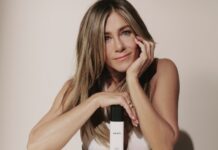
Brooke Monk for Doting.
Courtesy
Monk is one of several next-gen creators (née influencers) who, having learned from the do’s and don’ts of influencer brands past, are stepping out with businesses of their own.
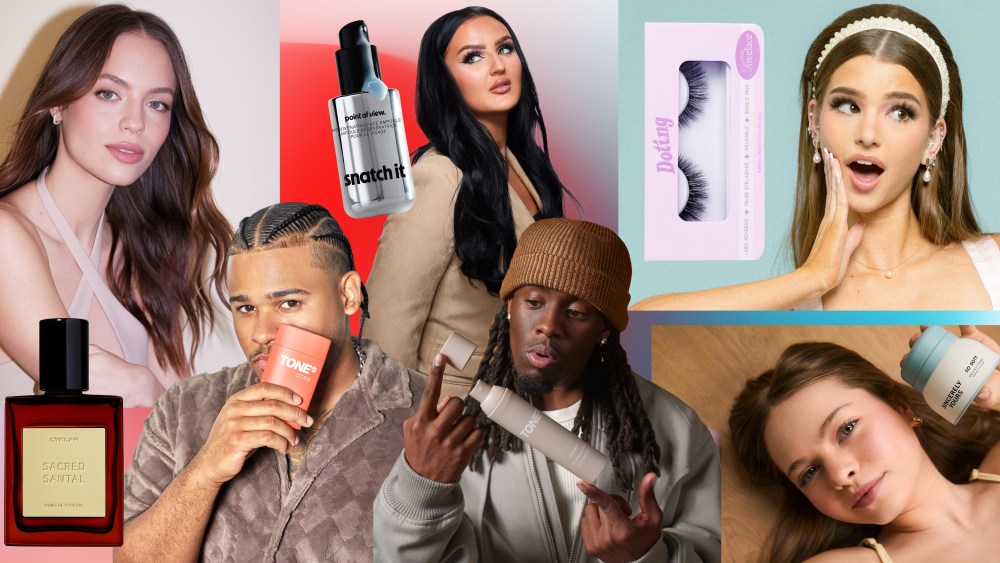
Her launch of Doting — which in its first month netted more than $180,000 in sales — follows the 2025 debuts of Mikayla Nogueira’s POV Beauty; 16-year-old Salish Matter’s Sincerely Yours, and streamer group AMP’s Tone, led by members including Kai Cenat and Duke Dennis. Olivia Jade, meanwhile, teased an upcoming cosmetics launch via Instagram in January.
The last time beauty saw such a pronounced influx of influencer brands was during the 2010s beauty-guru era, when entrants included Huda Kattan, Michelle Phan, Jeffree Star and Jaclyn Hill and their respective namesake brands. Marianna Hewitt’s and Lauren Ireland’s Summer Fridays and Patrick Starrr’s One/Size joined the arena in 2018 and 2020, respectively, and have continued to grow since.
This new wave of creator brands, though, is perhaps even more strategic than their predecessors, more attuned to tech shifts and advances through which brands thrive or whither.
“With the integration of AI into our lives, building something you own is so important nowadays,” said Devain Doolaramani, who works with Monk via his talent management company, Friends in Reality, and cofounded Doting. “The average life cycle of a creator now isn’t more than two to four strong years…brand deals are great, but there’s going to be a point for a lot of creators when a consistent flow of those doesn’t exist anymore.”

Mega-streamers and Tone cofounders Kai Cenat, Duke Dennis, Fannum, Agent 00, ImDaviss and ChrisNxtDoor.
Courtesy
True, influencers have more selling power than ever (Adobe data shows that this past holiday season, 20.4 percent of online sales across categories were driven by social media and affiliate links, up roughly 16 percent from 2024), but that power is more dispersed across an ever-growing number of micro- and mega-creators. Not to mention, AI and deepfake influencers, which are increasingly populating and peddling products on social media feeds.
To that end, today’s founder-creators are looking to build brands that first capitalize on, then transcend, their own selling power.
“POV Beauty is for anyone with a point of view — it’s very community-oriented,” said Kelly Dill, a partner at Imaginary Ventures, which backs POV and companies like Skims and Reformation. “We saw that Mikayla was someone who was really impacting the [beauty] category, and one of the things that got us excited about POV was that she wanted to create a brand that existed beyond her.”
As evidenced both by brands that have been successful and nonstarters alike, influencer-fronted propositions must fill a white space to establish meaningful legs. For Nogueira, that meant launching with skin prep products despite viewer expectations that she’d enter makeup straight away. It was a prescient move: POV did $1 million in direct-to-consumer sales in eight minutes when it launched last March, and has netted more than $4.3 million on TikTok Shop since launching there in July, per Charm.io.

POV’s Snatch It face serum.
Courtesy
Sincerely Yours, meanwhile, represents Sephora’s first explicit bet on teen skin care; Tone, which entered Target six months after launching, offers body care geared toward the fragrance-obsessed Gen-Z male, and Monk’s false eyelash play was so true to her personal brand that viewers guessed Doting’s core offering even before the reveal.
“Success for influencer beauty brands hinges on specificity,” said Kendall Becker, head of trend and editorial strategy at Trendalytics. “Brands that perform well are anchored in a creator’s niche rather than broad, mass-appeal positioning.”
“We are very honest with our clients; we are not going to build something just to build it, because it will fail,” said Eman Redwan, managing partner at Range Media Partners. “It’s like, let’s take a step back; let’s train your audience to purchase from you; build some credibility before we do that.”
Sincerely Yours offers four facial skin care products, each priced under $30 and geared toward 14- to 18-year-olds. According to the brand, its Hit Refresh facial mist is the number-two mist at Sephora, and data from Navigo Marketing shows Sincerely Yours comprised 1.7 percent of online skin care sales at Sephora during the last 13 weeks.

The Sincerely Yours lineup.
Isabella Behravan
Salish launched the brand alongside her father, Jordan Matter, whose family YouTube channel has more than 34 million subscribers, as well as chief executive officer Julia Straus, who has previously held that role at Tula and Sweaty Betty.
Will Sincerely Yours maintain its teen focus as its founder and face ages up?
“We absolutely want to stay focused on this core customer, because this is the customer that is underserved and there is such opportunity to focus and build here,” said Straus. “With that being said, this is Salish’s brand, and we’ll want to evolve along with her. So it’s a bit of both, not an either-or.”
Sincerely Yours has raised just under $7 million to date from investors including Coefficient Capital, Habitat Partners and Strand Equity. The latter firm also backs Tone, which cracked $1 million in sales three days after debuting and, like Sincerely Yours, enlisted a beauty veteran — Nathaniel Weiss, former president of Nécessaire — to help lead its launch. POV’s CEO, meanwhile, is Ani Hadjinian, former general manager of Augustinus Bader North America.
Doting, which is fully bootstrapped and offers four false lash styles priced at $10.99 per reusable pair, is targeting $2 million to $3 million in first-year sales. The brand has a handful of fractional employees working alongside Monk and Doolamarani, and is next looking to build out a TikTok Shop presence and enable DTC shipping to the U.K. and Australia, where it has seen the most international demand.
Longer-term, “we definitely want to do color cosmetics; eyeliner, mascara, brows, and I’m also working on designs for some accessories that we’re creating from scratch,” said Monk. As far as retail goes? “Sephora, Target; potentially even Walmart could be cool, because it’s accessible for people. Honestly, it could be cool to ask my audience where they’d want to find Doting, and listen.”