



Contents
Frequently Asked Questions
What makes Korean face masks innovative?
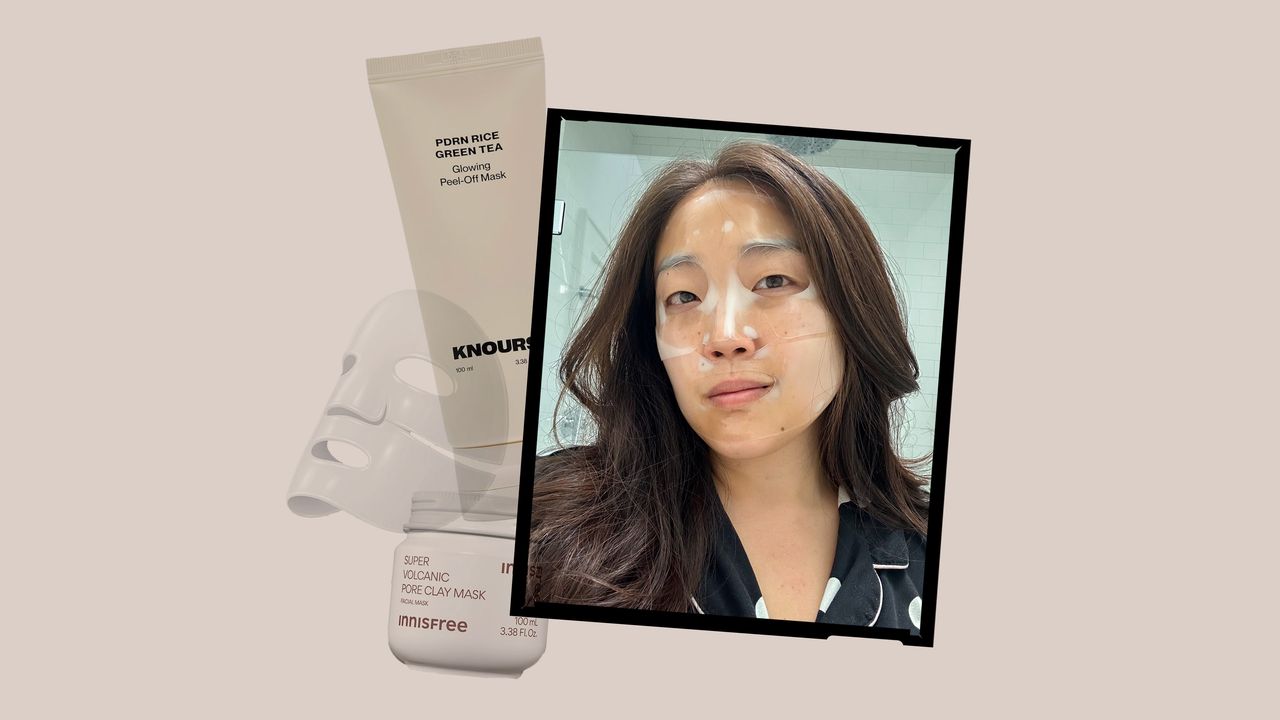
“Korean face masks are all about delivering high-performance results that help the skin optimize ingredient absorption,” says New York City-based Charlotte Cho, cofounder of K-beauty retailer Soko Glam and founder of Then I Met You. Adding on, Dr. Chang notes they “use advanced and innovative materials, ranging from bio-cellulose and hydrogel to bamboo fiber sheet masks, as well as overnight masks and peel-off masks,” adding that the range of mask types makes the experience fun and hands-on for the consumer.
Similar to other skin-care categories, Korean face masks are known to be gentle and supportive to the skin barrier—popular ingredients include Centella asiatica (also known as cica), ceramides, and fermented ingredients, Cho notes. “There’s also been a rise in multi-functional actives like PDRN (salmon DNA) for regeneration, Volufiline for plumping, and micro-spicules for deeper penetration—ingredients once reserved for professional treatments and are now found in serums and masks.” As for hydration, birch sap and polyglutamic acid are some of the mainstream, tried-and-true ingredients, Cho adds.
What are the different types of Korean face masks?
We broke down the most common types of face masks in an episode of our The Science of Beauty podcast, with the help of David Kim, MD, a board-certified dermatologist based in New York City. There, you’ll find everything you need to know about sheet, clay, charcoal, cream, wash-off, sleeping, peel-off, and bubble masks.
Meet the experts
- Y. Claire Chang, MD, a board-certified cosmetic dermatologist at UnionDerm in New York City
- Charlotte Cho, cofounder of K-beauty retailer Soko Glam and founder of Then I Met You, based in New York City
- Sarah Chung Park, founder and CEO of beauty distributor Landing International and creator of K-Beauty World at Ulta Beauty based in Los Angeles
- Christine Hall, MBChB, a general practitioner in medical aesthetics of Taktouk Clinic based in London
- David Kim, MD, a board-certified dermatologist at Idriss Dermatology and founder of Lightsaver, based in New York City
- Hee Jin Kim, MD, a board-certified medical doctor and Medical Director of PureenMD based in Fort Lee, NJ
How we test and review products
When Allure tests a product, our editors look at it from every angle in an effort to best serve you. We review ingredients, scrutinize brand claims, and, when necessary, examine peer-reviewed scientific and medical studies. In addition to testing each and every product that’s included in each and every review, we rely on experts who shape their fields, including dermatology, cosmetic chemistry, and medicine, to help us vet the ingredients and formulas.
For our list of the best Korean face masks to make your skin feel utterly refreshed, we considered each product’s performance across five primary categories: product ingredients and efficacy, packaging, fragrance, texture, and product wear. Every product was determined to have excelled in each category by our editorial team, which is composed of in-house writers and editors as well as contributors—along with special consideration from board-certified dermatologists. To learn more information on our reporting and testing processes, read our complete reviews process and methodology page.
Our staff and testers
A beauty product is a personal purchase. You might be searching for a face cream to address persistent dryness or a new nail product to add to your Sunday self-care routine; you may simply be browsing around for the latest launches to hit the hair market. No matter what you seek or your individual needs and concerns, Allure wants to ensure that you love anything we recommend in our stories. We believe that having a diverse team of writers and editors—in addition to the wide range of outside testers and industry experts we regularly call upon—is essential to reaching that goal.
After all, can we really say a skin-care product is the “best” for people over 50 if the only testers we’ve solicited opinions from folks who have yet to hit 30? Can we honestly deem a high-end diffuser worthy of your hard-earned cash if it’s never been tested on curls? We’re proud that our staff spans a wide range of ages, skin tones, hair textures, genders, and backgrounds, which means that we are able to fairly assess any beauty product that comes into the beauty closet.
Korean skin care has our hearts. The following shopping stories are proof: